Article: How to Plan a Connected Literacy Block in Years 2–6
From the Classroom · Planning
How to Plan a Connected Literacy Block in Years 2–6 Simple routines, less planning.
Simplify your literacy planning with five consistent routines that connect fluency, vocabulary, comprehension and writing in Years 2–6.
- 5 daily routines
- Connected learning
- Less planning
Simple routines, meaningful connections and less planning.
Planning a literacy block can feel like putting together five different puzzles.
There's reading fluency, spelling, vocabulary, comprehension and writing. Each has its own learning intentions, resources and activities. Before you know it, you're planning multiple lessons that don't always have much to do with one another.
But what if those different parts of your literacy block could actually work together?
That's the idea behind a connected literacy block. Rather than treating each area of literacy as a separate subject, we look for genuine connections between the texts, vocabulary, concepts and skills students are learning.
And the best part? It doesn't need to mean more planning.
What is a connected literacy block?
A connected literacy block brings different areas of literacy instruction together through shared texts, vocabulary, themes and learning goals.
Students might meet new vocabulary while reading, explore its meaning during vocabulary instruction and then use it in their own writing.
Instead of introducing something new in every lesson, we're giving students multiple chances to revisit, practise and apply what they're learning.
This doesn't mean every activity needs to be about the same topic, or that every literacy lesson needs to connect perfectly. It simply means we're being intentional about the connections we make.
The five routines in my literacy block
Over time, I've simplified my literacy block into five consistent instructional routines.
- Quick Write: A short chance for students to write independently, build writing stamina and experiment with language.
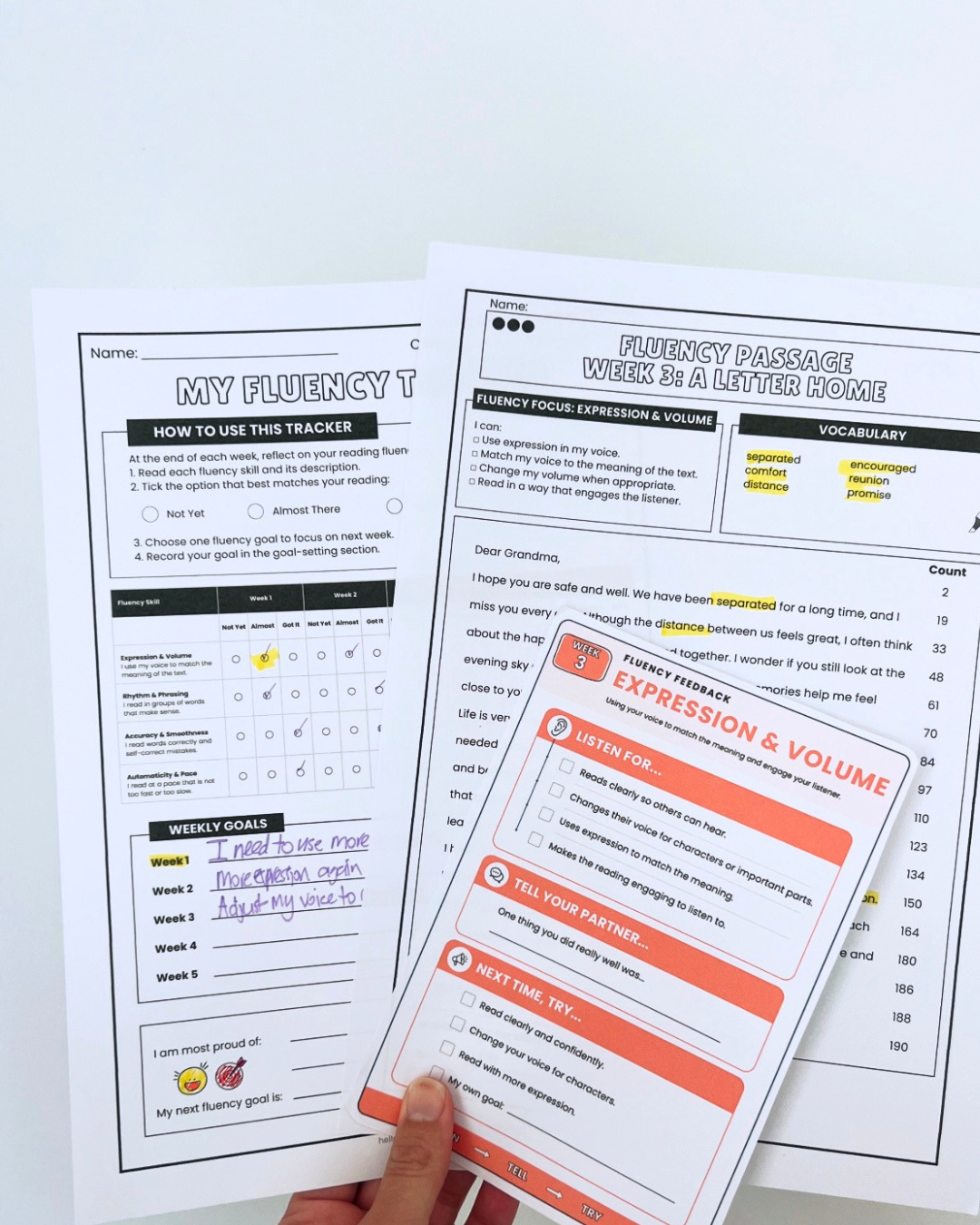
- Fluency: Explicit instruction and repeated reading to develop accuracy, phrasing, expression and automaticity.
- Spelling and Vocabulary: Teaching spelling patterns, word meanings and sentence construction, including Sentence of the Day.
- Comprehension: Instruction in understanding, discussing and responding to texts.
- Writing: Teaching, modelling, guided practice and independent application of writing skills.
Each routine has its own purpose, but the real value comes from connecting them.
For example, vocabulary found in the mentor text might appear in a fluency passage, be explored through Sentence of the Day and become part of students' independent writing.
One of my favourite moments is when a student excitedly tells me they've used a word from their fluency passage in their own writing. It's such a simple thing, but it shows they're beginning to make those connections independently, and that's exactly what we're working towards.
The routines stay consistent. The content and learning focus change. And because students know what to expect, less time is spent explaining how each activity works and more time goes into the actual learning.
What does a connected literacy block look like in practice?
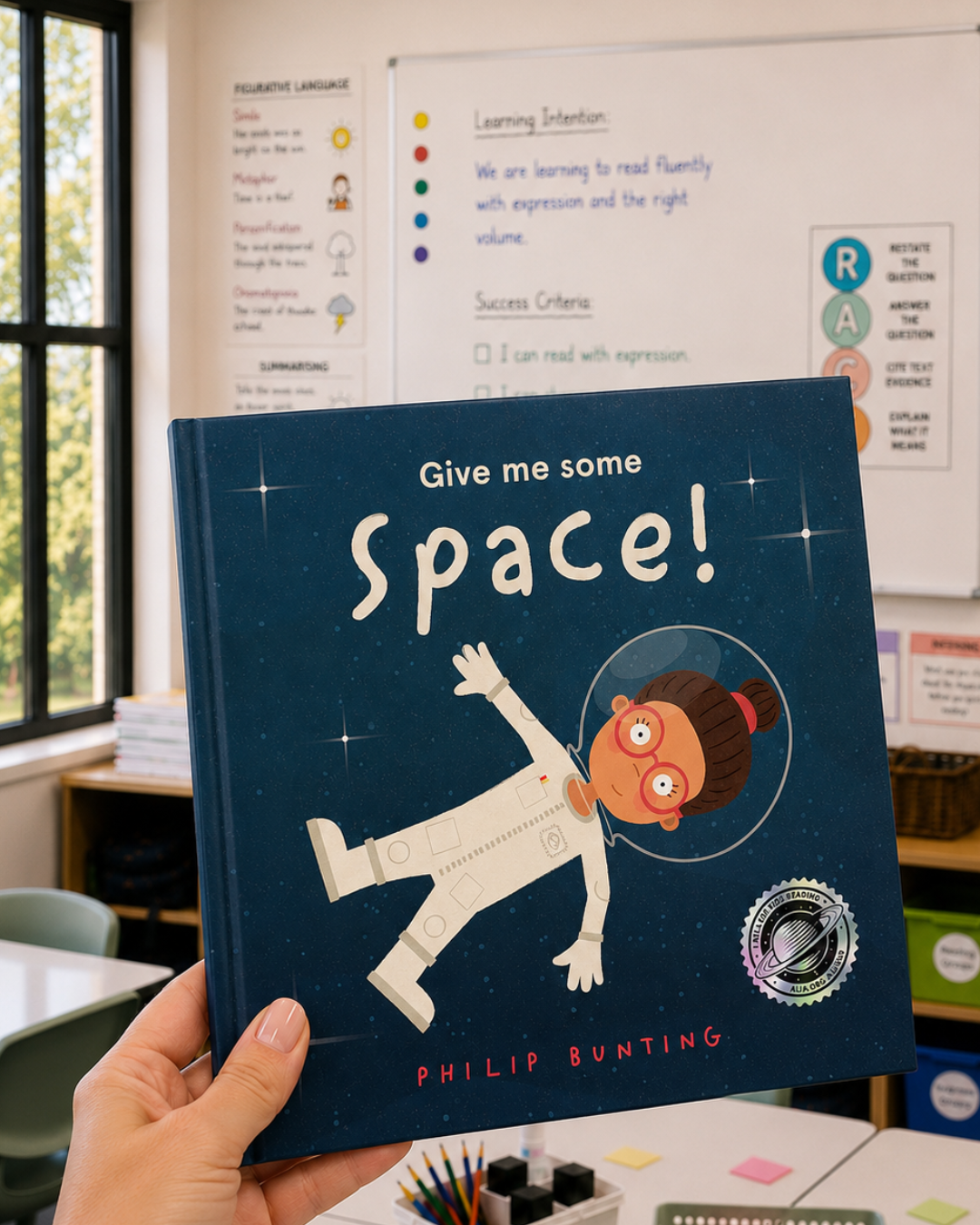
Let's imagine we're planning a five-week informative writing unit exploring space.
Rather than finding five unrelated sets of literacy activities, we can start with our central learning focus and build connections across the block.
| Routine | In the space unit |
|---|---|
| Comprehension and Writing | Read informative texts about space, then write informative texts using the same features |
| Spelling and Vocabulary | Teach words like orbit, atmosphere, gravity and exploration |
| Fluency | Repeated reading of engaging passages connected to space |
| Sentence of the Day | Build and improve sentences using space vocabulary |
| Quick Write | Respond to a space-themed visual prompt |
Comprehension and Writing
We begin with quality informative texts about space. Students explore how information is organised, how authors explain scientific concepts and how language helps readers understand unfamiliar ideas.
During writing lessons, students learn to apply these features in their own informative texts.
Spelling and Vocabulary
We select vocabulary that supports students' understanding of the texts and their writing, such as orbit, atmosphere, gravity and exploration.
Students explore word meanings, spelling patterns and how words function within sentences.
Fluency
Students practise reading engaging passages connected to space, so they meet familiar concepts and vocabulary again while developing their reading fluency.
The focus remains on fluency instruction, rather than turning repeated reading into another comprehension lesson.

Sentence of the Day
Students practise sentence-level skills using language connected to their learning. For example, we might start with:
The spacecraft travelled through space.
Students could combine it with another sentence, choose more precise vocabulary or add detail to communicate information more clearly:
The spacecraft travelled silently through the vast darkness of space, searching for new planets.

Quick Write
Students respond independently to an engaging visual prompt connected to space. They might imagine discovering a new planet, describe an unfamiliar landscape or explain what they would take on a space mission.
This lets them draw on vocabulary and language they've met throughout the week, while building confidence and independence as writers.

The result? Five distinct routines, each with a clear purpose, connected through meaningful learning.
How to plan your own connected literacy block
You don't need to redesign your entire literacy program to start making connections. Here's a simple approach you can try.
1. Start with your mentor text and learning goals
Choose a quality text or collection of texts that supports your curriculum outcomes. Think about what you want students to understand, discuss and eventually create.
Your text provides a starting point for making connections, but your curriculum goals should guide the instruction.
2. Plan comprehension and writing first
Identify the comprehension skills, text features and writing knowledge students need to develop. Map out your explicit teaching, modelling, guided practice and independent application.
This gives the rest of your literacy planning a clear direction.
3. Identify your vocabulary and spelling focus
Look closely at the language students will encounter. Which words are important for understanding the texts? Which words could strengthen their writing? Are there useful spelling patterns or morphological features worth exploring?
Select vocabulary intentionally rather than trying to teach every unfamiliar word.
4. Make purposeful connections across your routines
Now look for ways to revisit the same language and concepts.
- Could your fluency passages reinforce vocabulary from your mentor text?
- Could Sentence of the Day give students practice building sentences with familiar words?
- Could your Quick Write prompts encourage students to apply ideas and language they've been exploring?
The goal isn't to force a connection into every lesson. It's to make connections where they genuinely support learning.
5. Keep the routines consistent
One of the simplest ways to make a literacy block manageable is to establish predictable routines. Students become familiar with what happens during fluency, how Sentence of the Day works and what's expected during Quick Write.
You can then change the texts, vocabulary and teaching focus without constantly introducing new activity structures. For teachers, this means less time spent planning different types of activities and more time thinking about the quality of instruction.
Connected doesn't have to mean complicated
A connected literacy block isn't about making every lesson fit perfectly into a theme. It's about recognising that reading, vocabulary, sentence construction and writing support one another, and planning for students to make those connections.
You can still explicitly teach individual skills. You can still respond to student needs, provide targeted instruction and adjust your teaching along the way.
The difference is that your literacy block begins to feel less like a collection of separate activities and more like a cohesive learning experience.
And that's what I keep coming back to when planning: simple routines, purposeful teaching and meaningful connections.
Want to simplify your literacy planning?
At Hello Primary, I've created a collection of editable literacy frameworks and ready-to-teach five-week mini units designed around consistent instructional routines.
My Fluency, Sentence of the Day and Quick Write mini units are designed to complement one another, helping students read, practise and apply vocabulary and language across their literacy learning.
Whether you're looking to establish your own routines or save time with connected, ready-to-teach resources, you can explore the Connected Literacy Bundles in the Hello Primary shop.
Say hello to less planning + more time for you.