Article: Teaching Writing Alongside Reading
From the Classroom · Writing
Teaching Writing Alongside Reading From mentor text to independent writing.
Use the texts students are already reading to teach writing, with a simple routine that moves from reading like a writer to independent writing.
- Imagery
- Symbolism
- Connotation
Reading and writing are often planned as two separate lessons, with a comprehension text in one part of the day and an unrelated writing task in another. Students are then asked to write something they have never seen modelled, using language they have never had the chance to notice.
When reading and writing are planned together, the text students read becomes the model for the text they write. Students already know the topic, have met the vocabulary and have seen how an author organises their ideas, so writing becomes the next step rather than a fresh start.
Why teach reading and writing together?
Reading shows students what good writing looks like, and writing helps students understand how texts are built. Each one strengthens the other.
When students have read and discussed a text closely, they bring that knowledge, vocabulary and sense of structure into their own writing. When they try to write in the same way, they start to notice the choices authors make, which makes them more thoughtful readers.
Teaching them together also saves time, since one well-chosen text can carry both your comprehension and writing teaching across a week or more.
Read for meaning first
Students need to understand a text before they can learn to write like it. The first reads of a mentor text are about comprehension: what the text is about, what the author wants us to know and how the ideas connect.
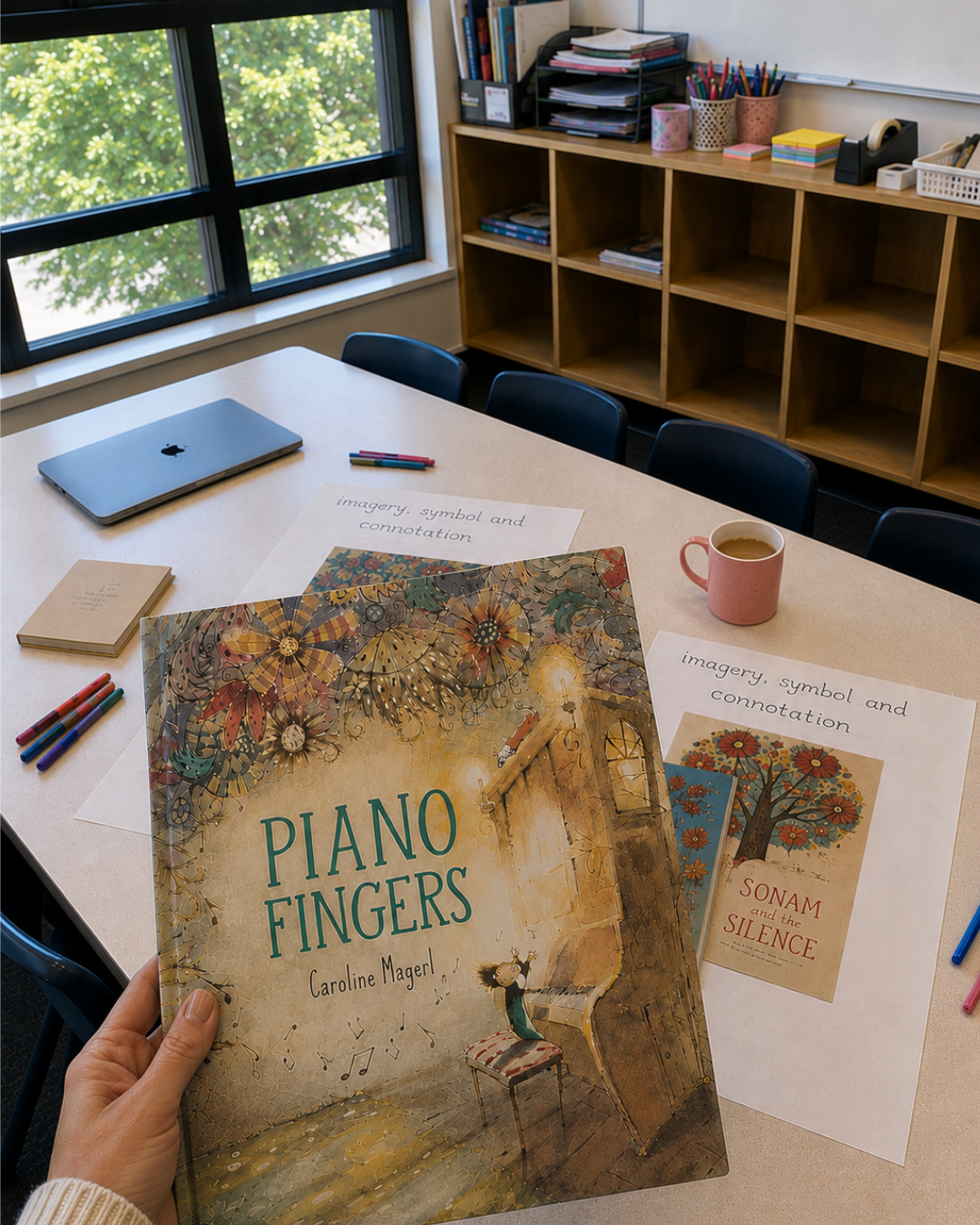
This is where students build the knowledge they will later draw on in their writing. In a unit pairing Sonam and the Silence by Eddie Ayres, illustrated by Ronak Taher, with Piano Fingers by Caroline Magerl, students might first talk about each character’s world, what music means to them and how they change across the story.
Then read like a writer
Once students understand the text, they return to it with a different question: How did the author write this?
Reading like a writer means noticing the choices that make a text work. With these two picture books, students might look at:
- imagery: how the author uses sensory and figurative language to help the reader see, hear and feel a moment
- symbolism: how an object or idea, such as silence or music, comes to stand for something bigger than itself
- connotation: how word choices carry feelings beyond their dictionary meaning, such as the difference between quiet, hushed and empty
- how a character’s feelings are shown through what they see, hear and do, rather than simply named
Reading two texts side by side makes these features easier to spot, since students can compare how each author uses the same technique in a different way.
Focus on one or two features at a time. Trying to notice everything at once can overwhelm students, while a narrow focus gives them something specific to take into their own writing.
Move from reading to writing
 A simple teaching sequence helps students move from noticing a feature to using it independently.
- Deconstruct a model. Display a short exemplar, often a paragraph rather than a whole text, and identify the focus feature together.
- Write together. Jointly construct a paragraph with the class, thinking aloud as you make choices and inviting students to suggest words and sentences.
- Write with support. Students write their own paragraph using a scaffold, such as a sentence starter, word bank or paragraph planner.
- Write independently. Students apply the feature in their own writing, drawing on the knowledge and vocabulary they built during reading.
Joint construction is often the step that gets rushed, even though it is where students hear how a writer thinks. Writing with the class shows them that good writing comes from deliberate choices and plenty of rereading and changing.
What it looks like in a week
Let’s look at a week built around Sonam and the Silence and Piano Fingers.
- Reading: students read both texts and discuss what music means to each character and how it changes them.
- Reading like a writer: the class compares how each author uses imagery to help the reader hear the music, and how music and silence come to symbolise something bigger in each story.
- Fluency: students reread a short passage connected to the theme of belonging, building familiarity with the vocabulary and ideas they will write about.
- Vocabulary and Sentence of the Day: students explore the connotations of words such as quiet, hushed, still and empty, then choose the most precise word to create a particular feeling in a sentence.
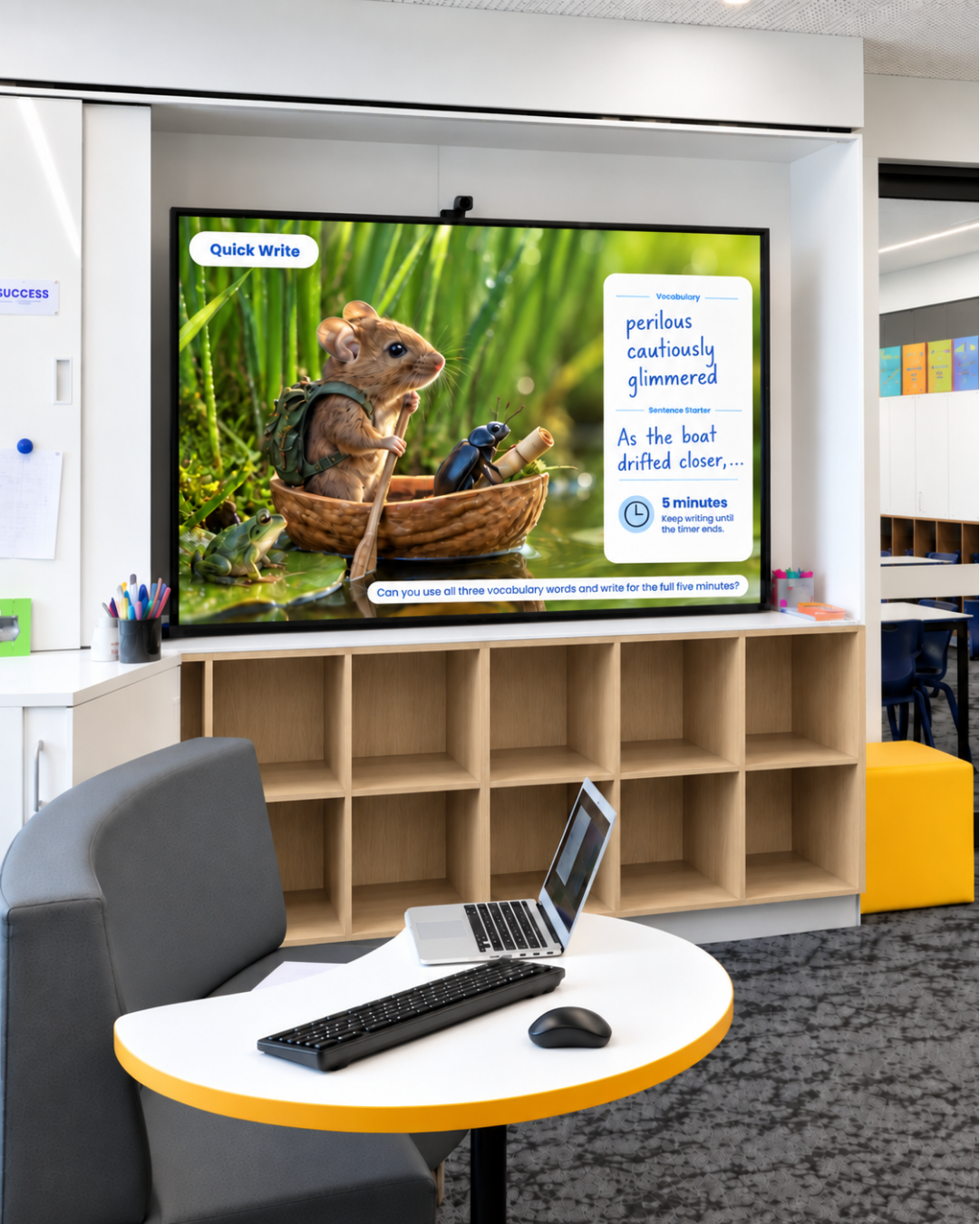
- Quick Write: students describe a place that is completely silent, then what changes when a single sound breaks the silence.
- Writing: the class jointly constructs a paragraph in which an object, such as an old instrument, carries meaning for a character, then students write their own paragraph using imagery and a symbol of their own.
Each part of the week has its own purpose, yet every part connects to the same texts and the same writing focus. By the time students write independently, they have read, discussed, practised and talked through the features several times.
Tips for teaching writing alongside reading
 A few things that make the biggest difference:
- Choose texts worth revisiting. A strong mentor text should hold up to several reads, for meaning and for craft.
- Keep exemplars short. A single paragraph is often enough to model a feature clearly.
- Use syllabus language. Naming features accurately, such as imagery, symbolism and connotation, helps students talk about their writing with confidence.
- Let students highlight their choices. Asking students to find the focus feature in their own writing helps them see what they have learnt and gives you a quick check of understanding.
This approach sits at the heart of a connected literacy block, alongside a daily fluency routine and Quick Writes.
Ready-to-teach writing lessons
If you’d like this sequence planned for you, my Writing Mini Lessons take students from a modelled example to independent writing, with lesson slides, worksheets and a clear scope and sequence. My Sentence of the Day units give students daily practice with the sentence-level skills they need.
Say hello to less planning + more time for you.