
Literacy, Unpacked · Start here
Read. Practise. Apply.
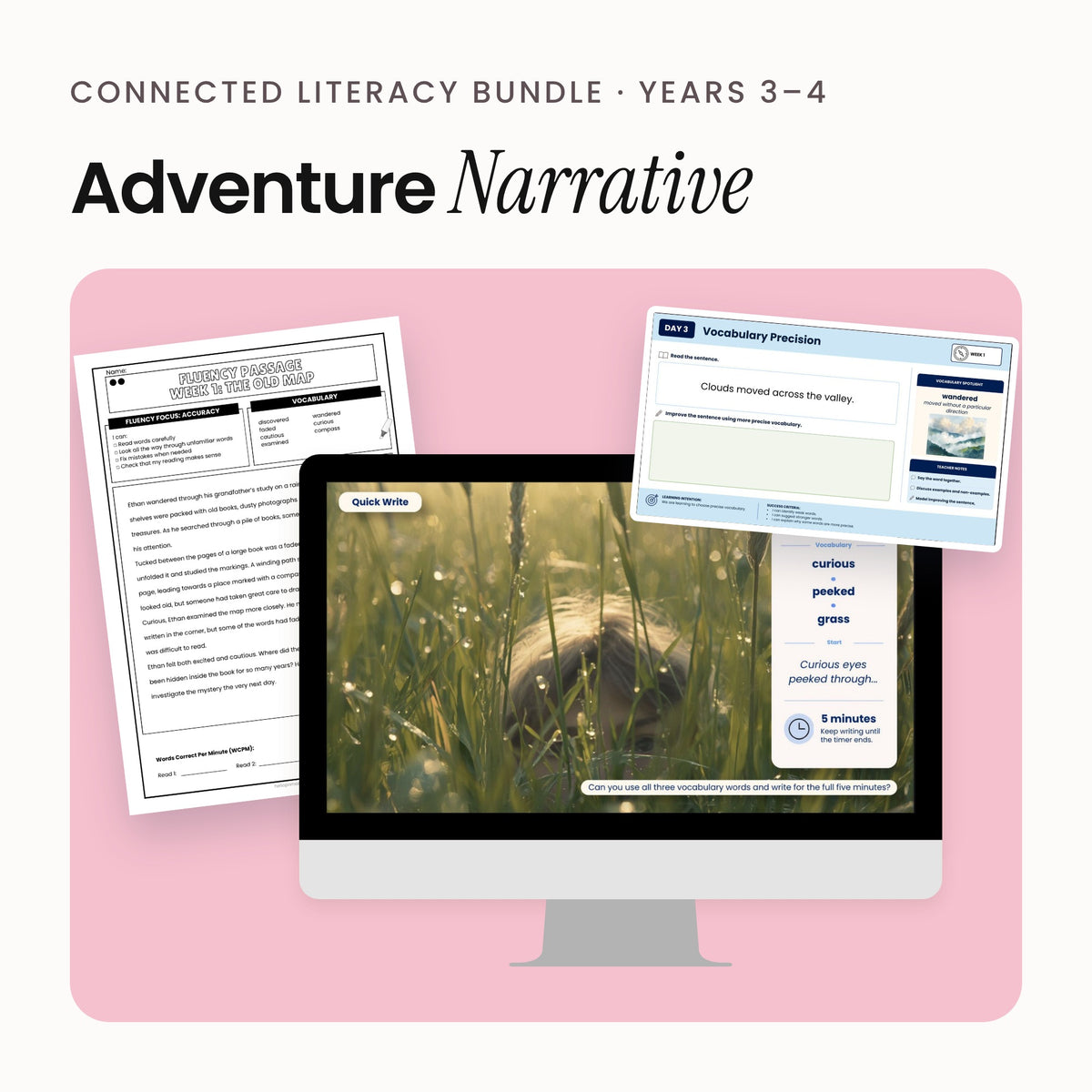
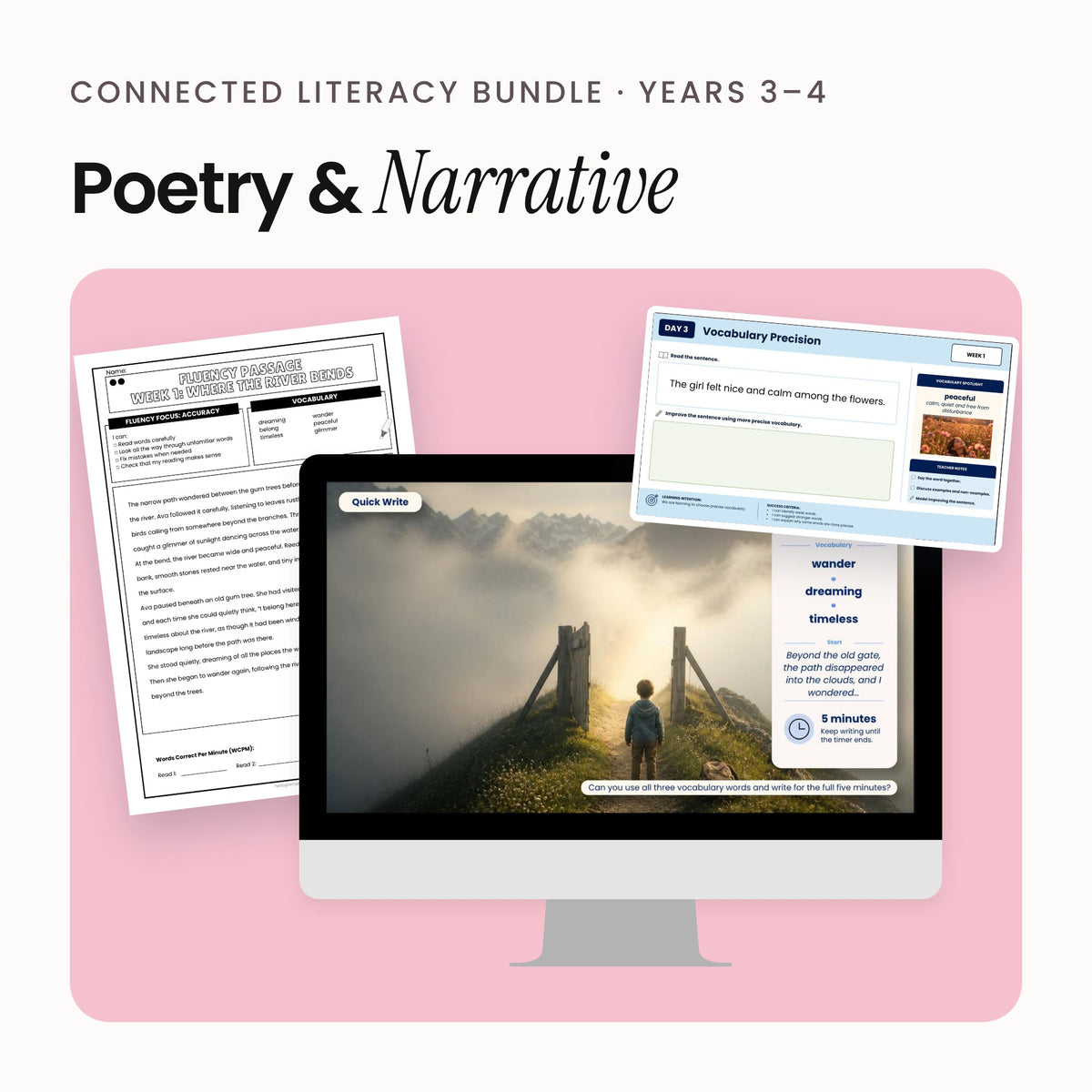
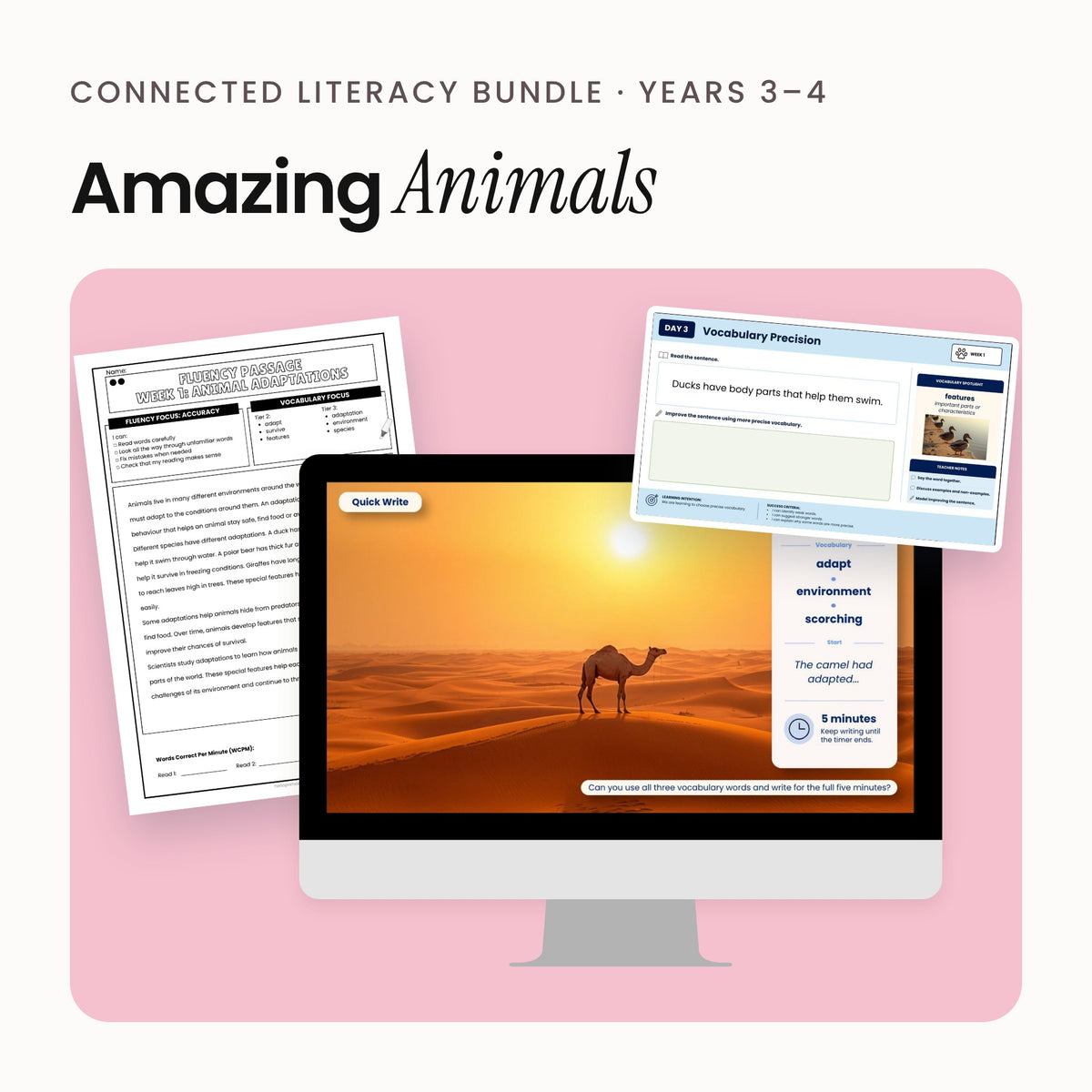
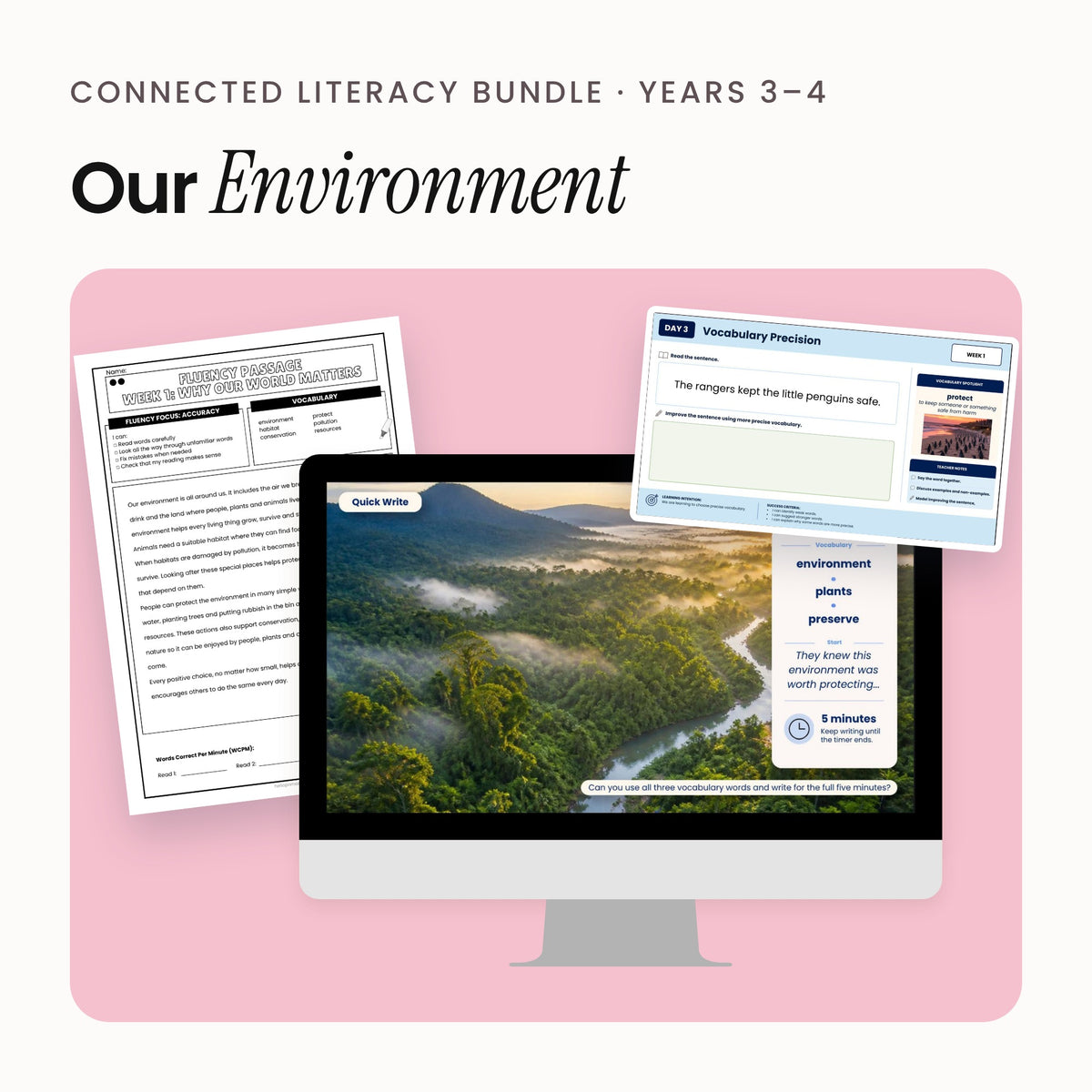
Hello Primary resources are built around one connected literacy block. Reading Fluency, Sentence of the Day and Quick Writes share one theme and one set of words, so students meet new vocabulary again and again until it's theirs to use.
What you'll learn
- Why students need to meet a new word many times before they use it in their own writing
- How Reading Fluency, Sentence of the Day and Quick Writes connect through one theme and one set of words
- What a week of the connected literacy block can look like in your classroom
- Where the routines sit in the NSW syllabus and the Australian Curriculum
No. 01 — Why connect the routines
One set of words, three ways in
Most literacy blocks are made of separate parts: a reading passage, a grammar warm-up, a writing task. Each one is useful, but when they don't connect, students often meet a new word once and rarely see it again. The connected literacy block carries the same theme and vocabulary through all three routines, so each one builds on the one before.
Three ideas sit behind it.
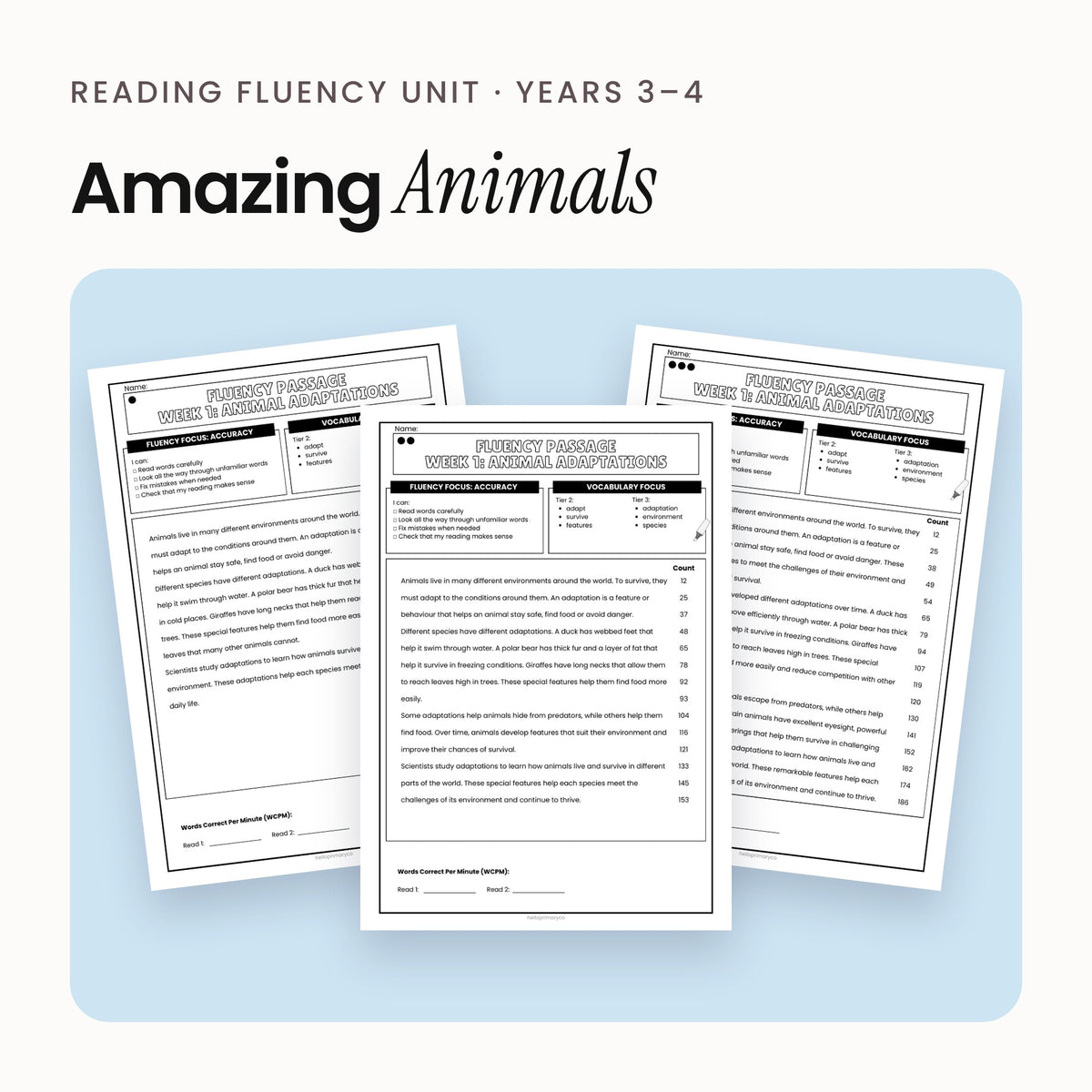
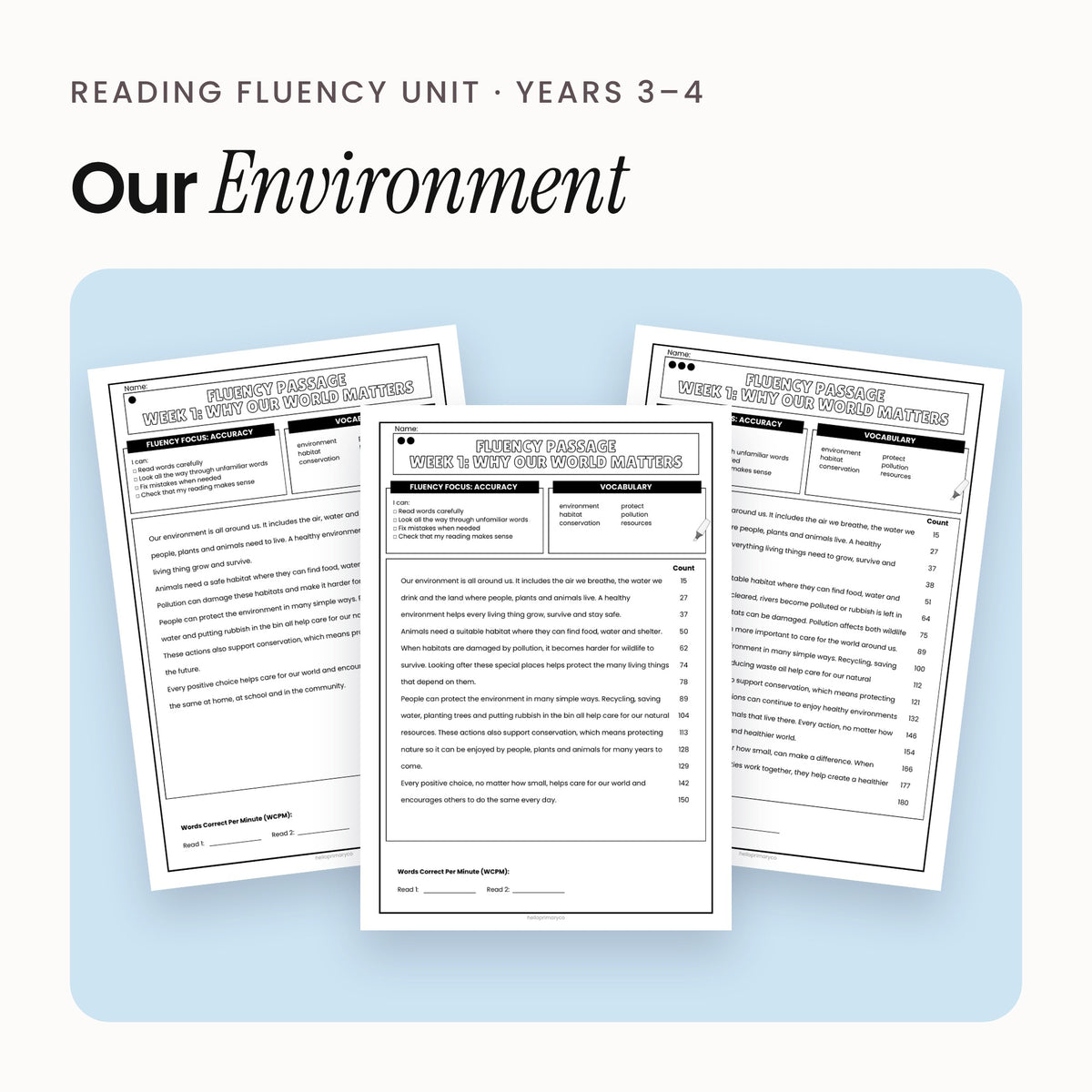
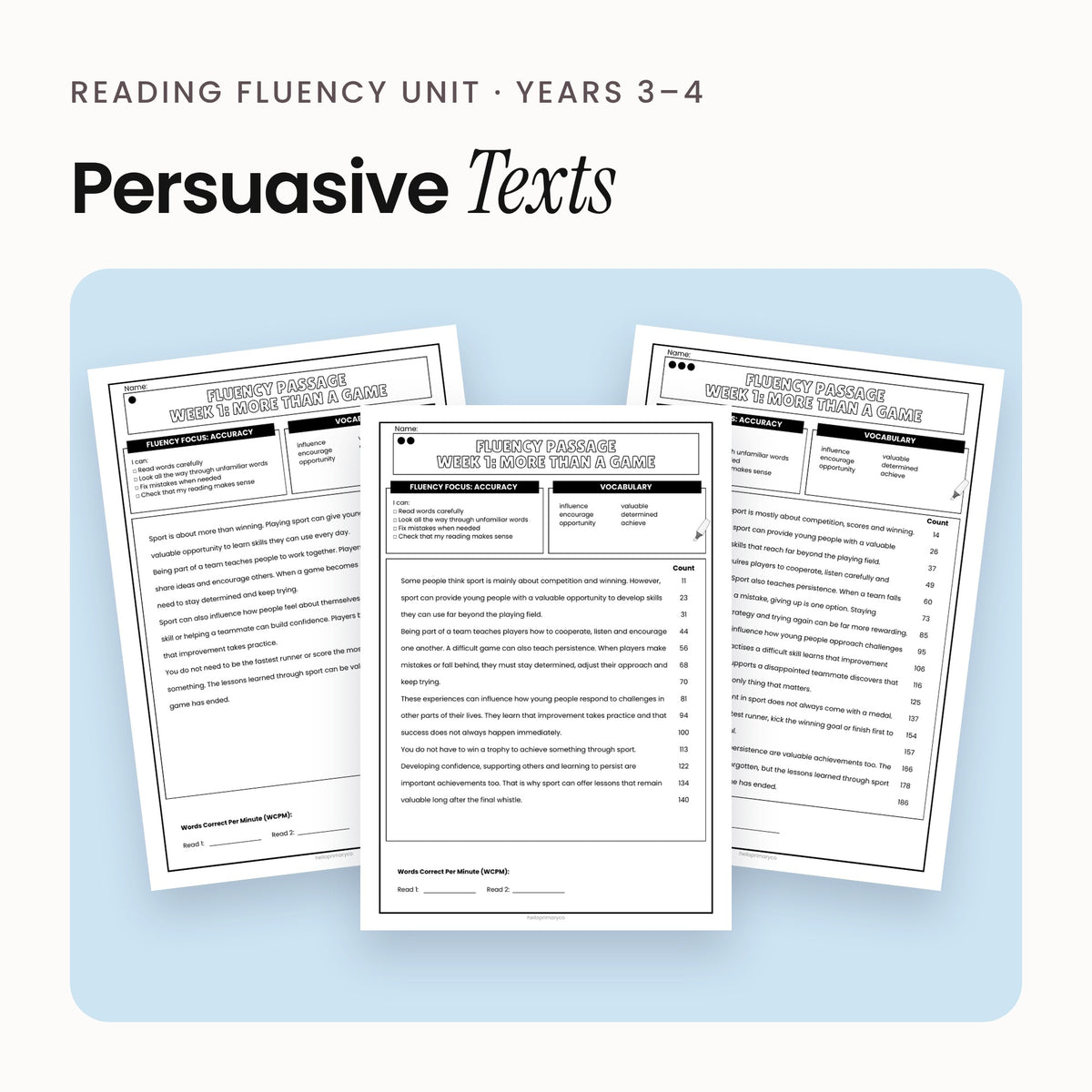
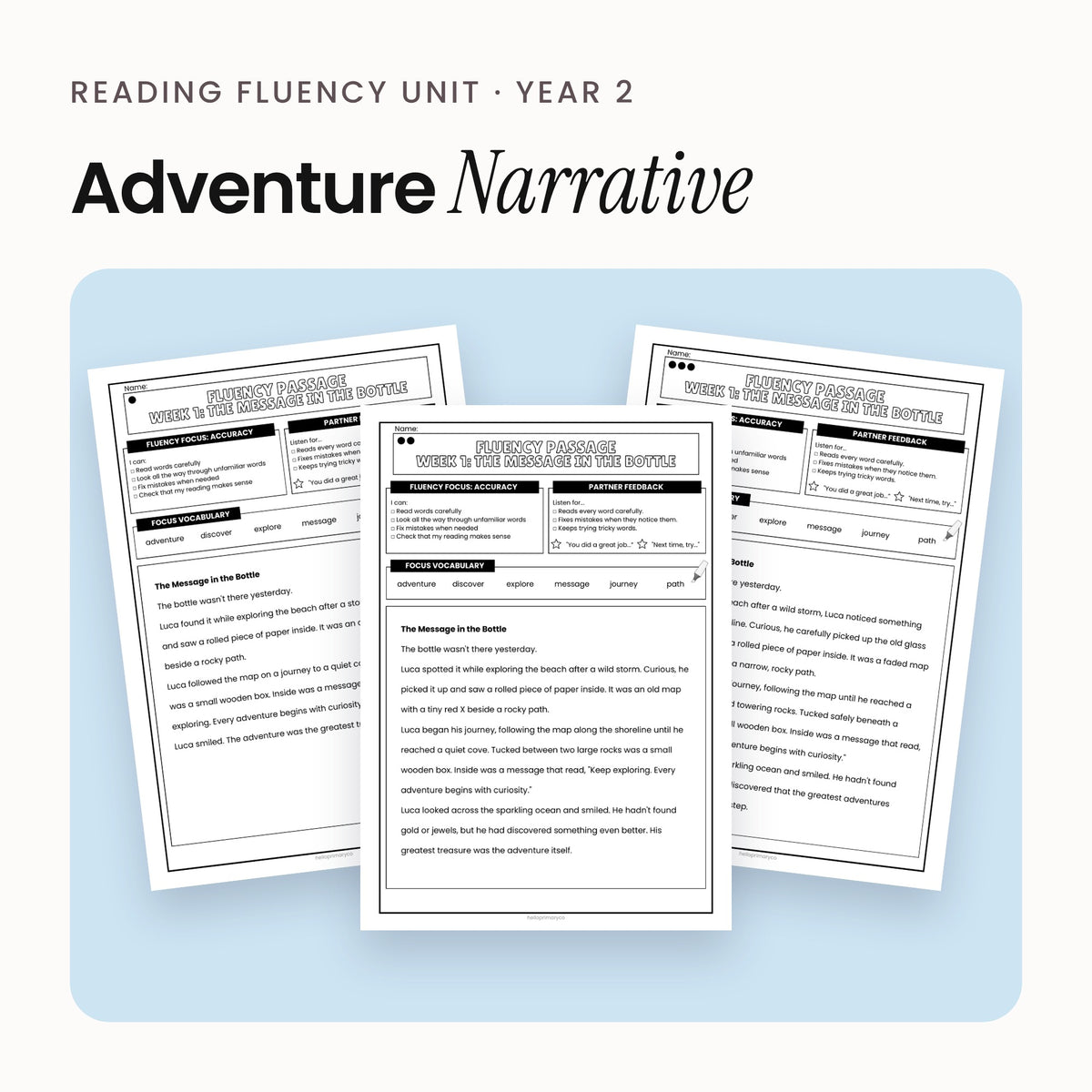
Repeated reading builds fluency. When students reread the same text with guidance and feedback, their accuracy, pace and expression improve, and so does their understanding of what they read. In Reading Fluency, students reread one short passage across the week, with a new focus each day.
Vocabulary grows through use, not just exposure. Students need to meet a new word in context, then have many chances to notice, understand and use it before it becomes their own. Each week's words appear in the fluency passage, return in Sentence of the Day and are used again in Quick Writes.
Sentence-level practice strengthens writing. Short, regular practice in combining and improving sentences helps students write more varied and sophisticated sentences in their own work. Sentence of the Day gives students that practice every day, using the week's words.
No. 02 — The routines, step by step
How the three routines connect
Each routine has its own job. Together they move students from reading a word, to practising it in a sentence, to using it in their own writing.
-
 Read
Reading Fluency
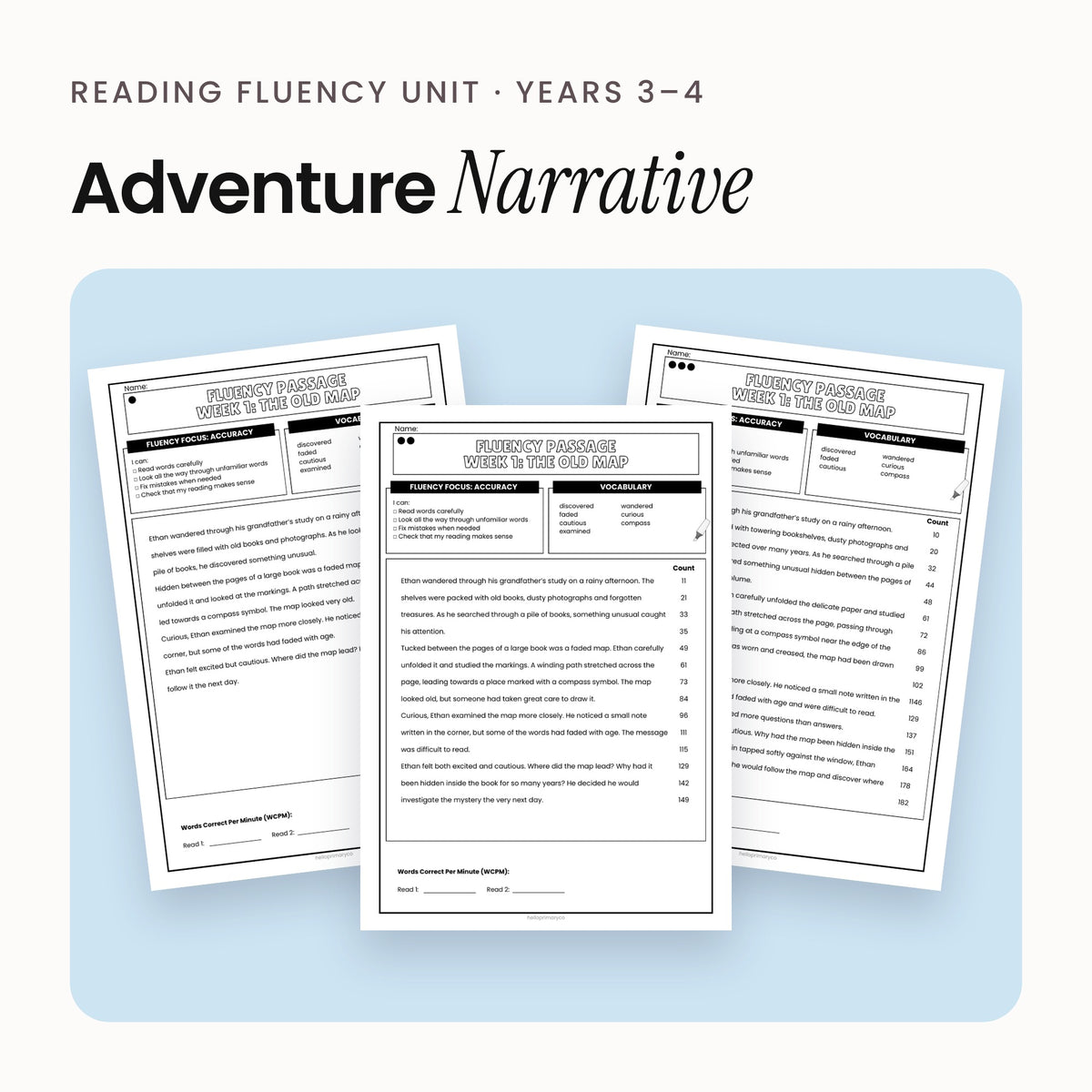
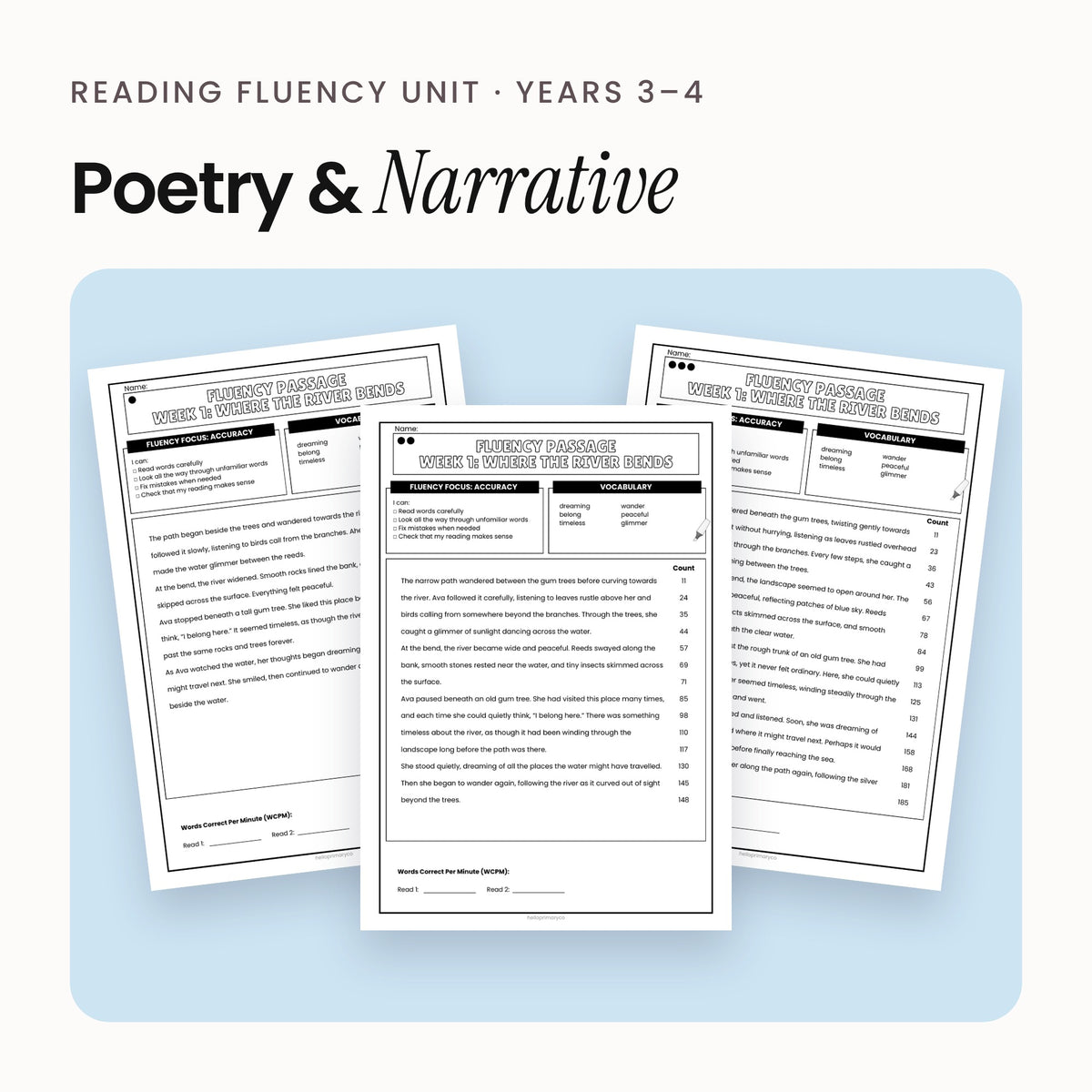
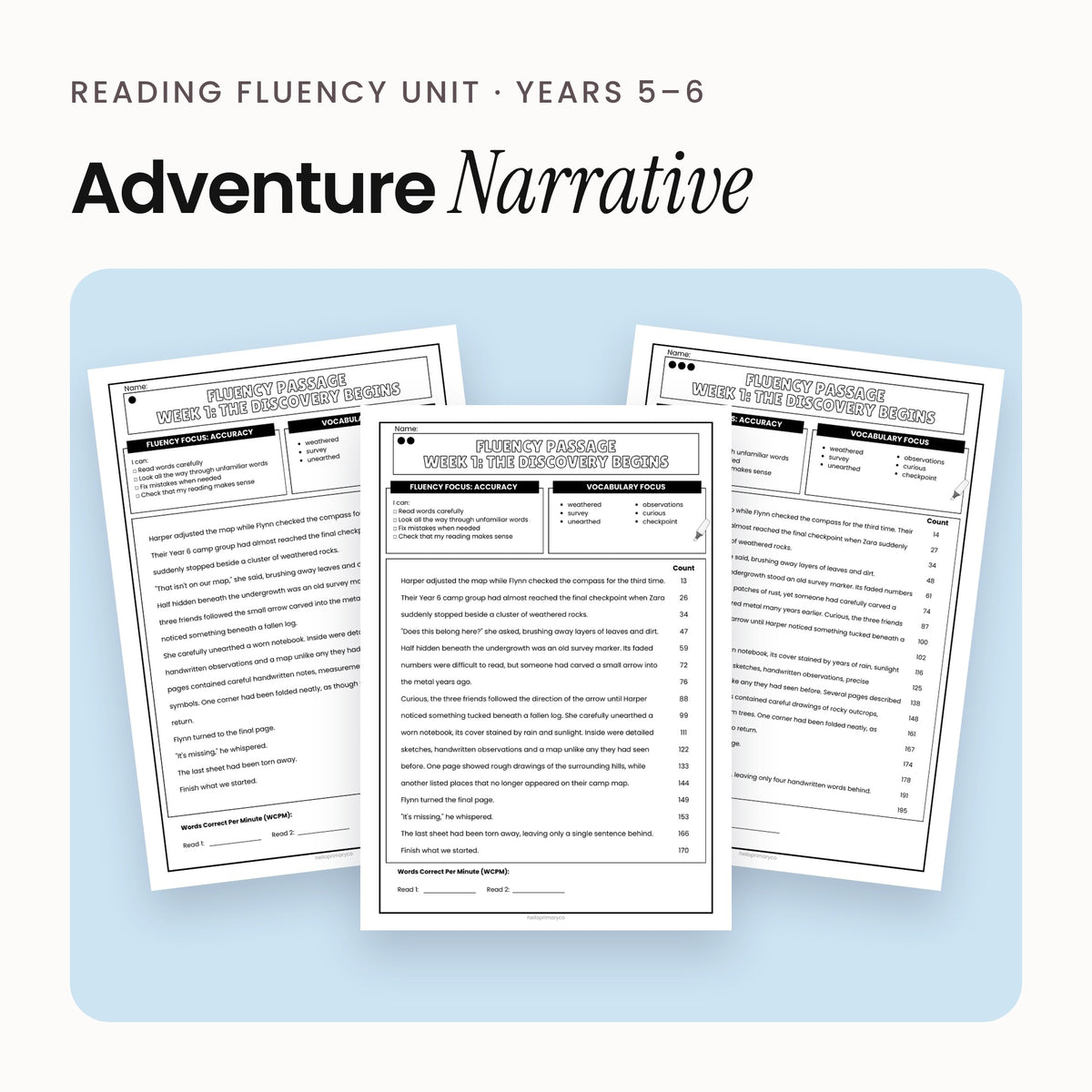
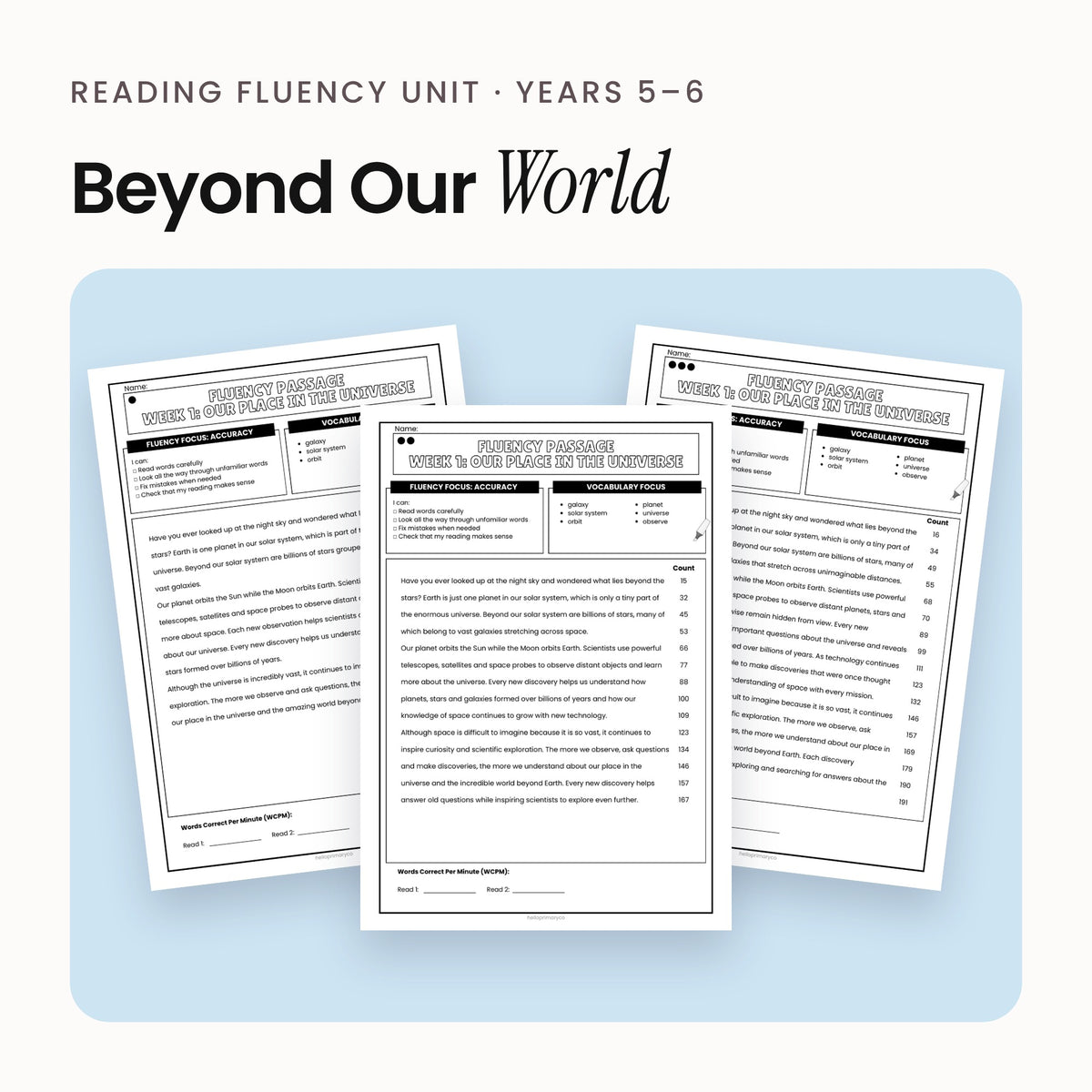
Fluency, unpackedEach week starts with a short, differentiated passage that students reread every day, building accuracy, rate and expression. The passage introduces the week's vocabulary in context, and three levels mean every student reads the same text at the right level of challenge.
-
 Practise
Sentence of the Day
Vocabulary, unpackedA quick daily routine where students build, combine and improve sentences using the same vocabulary. They practise sentence-level skills such as noun groups, conjunctions and precise verbs, so the new words become words they can use.
-
 Apply
Quick Writes
Quick Writes, unpackedStudents respond to a visual prompt with five minutes of focused, independent writing, bringing the week's vocabulary and sentence skills into their own work. Short and low pressure, so every student writes every day.


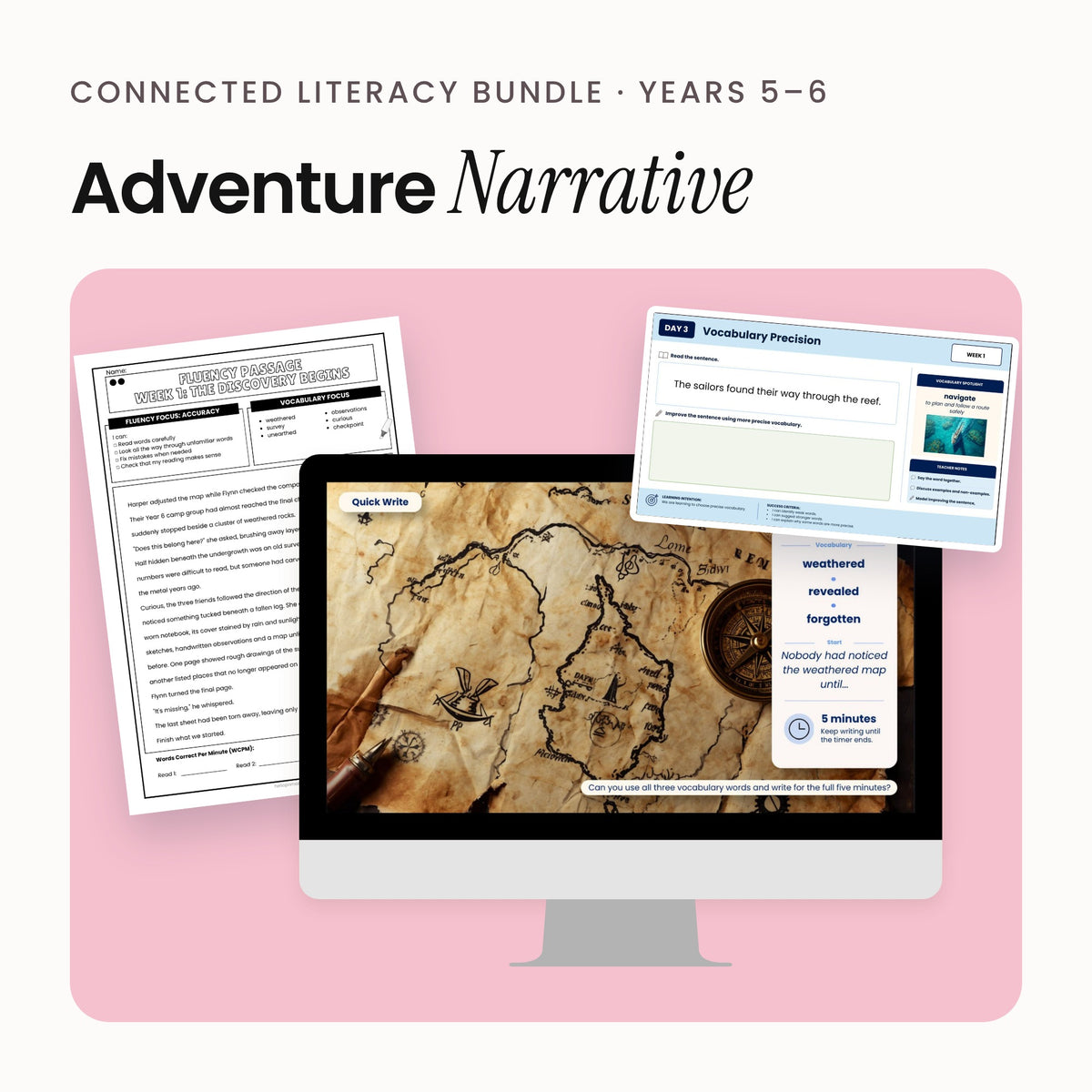
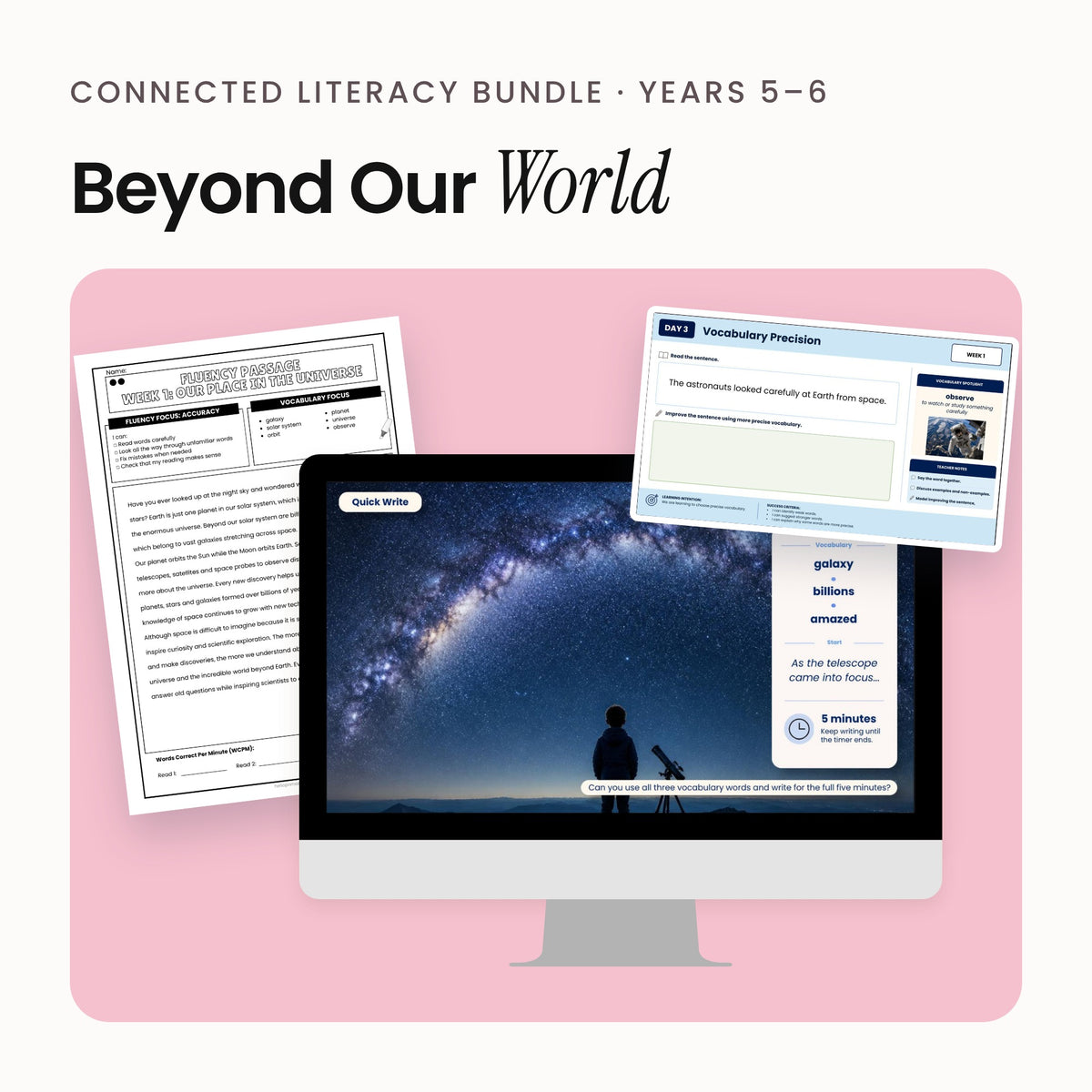
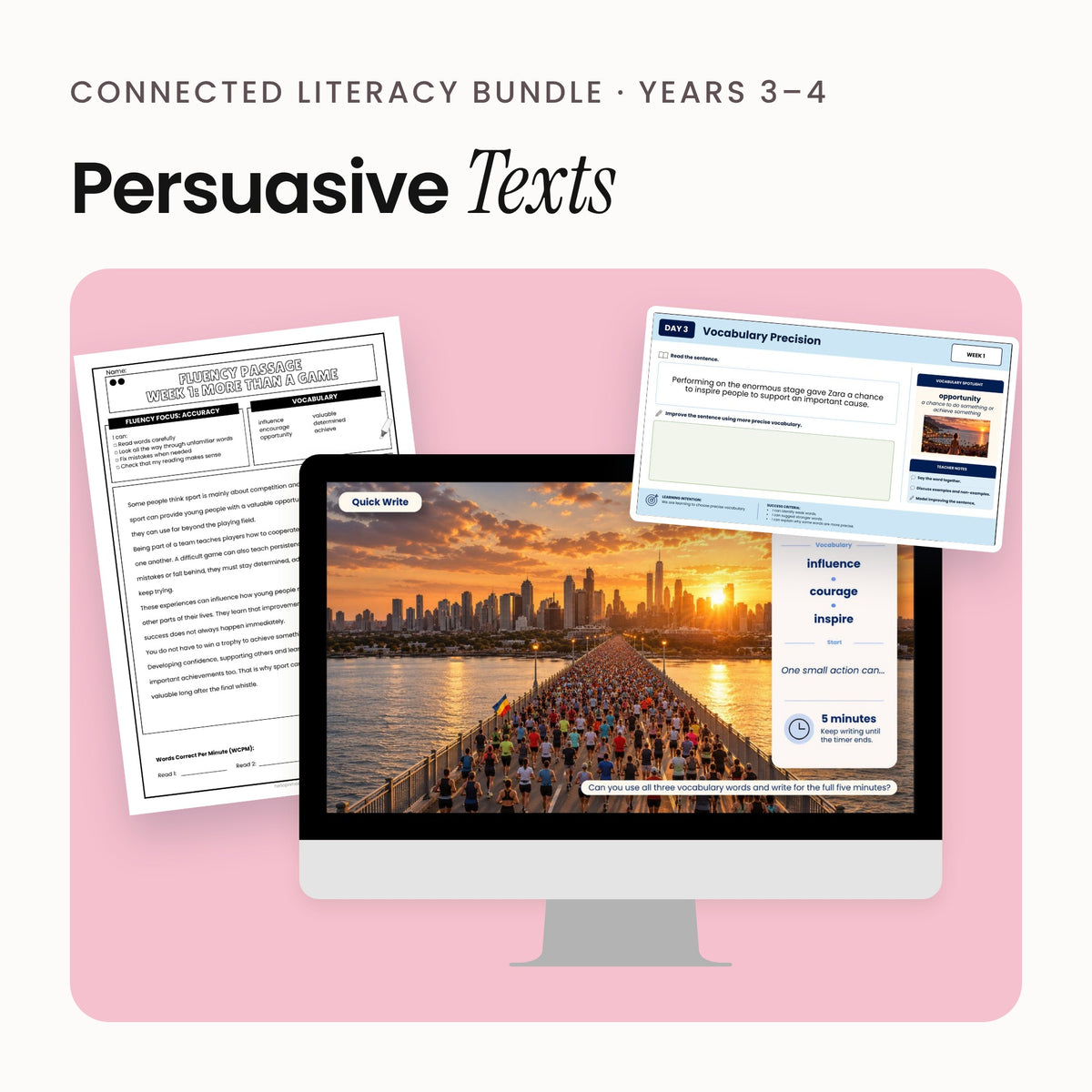
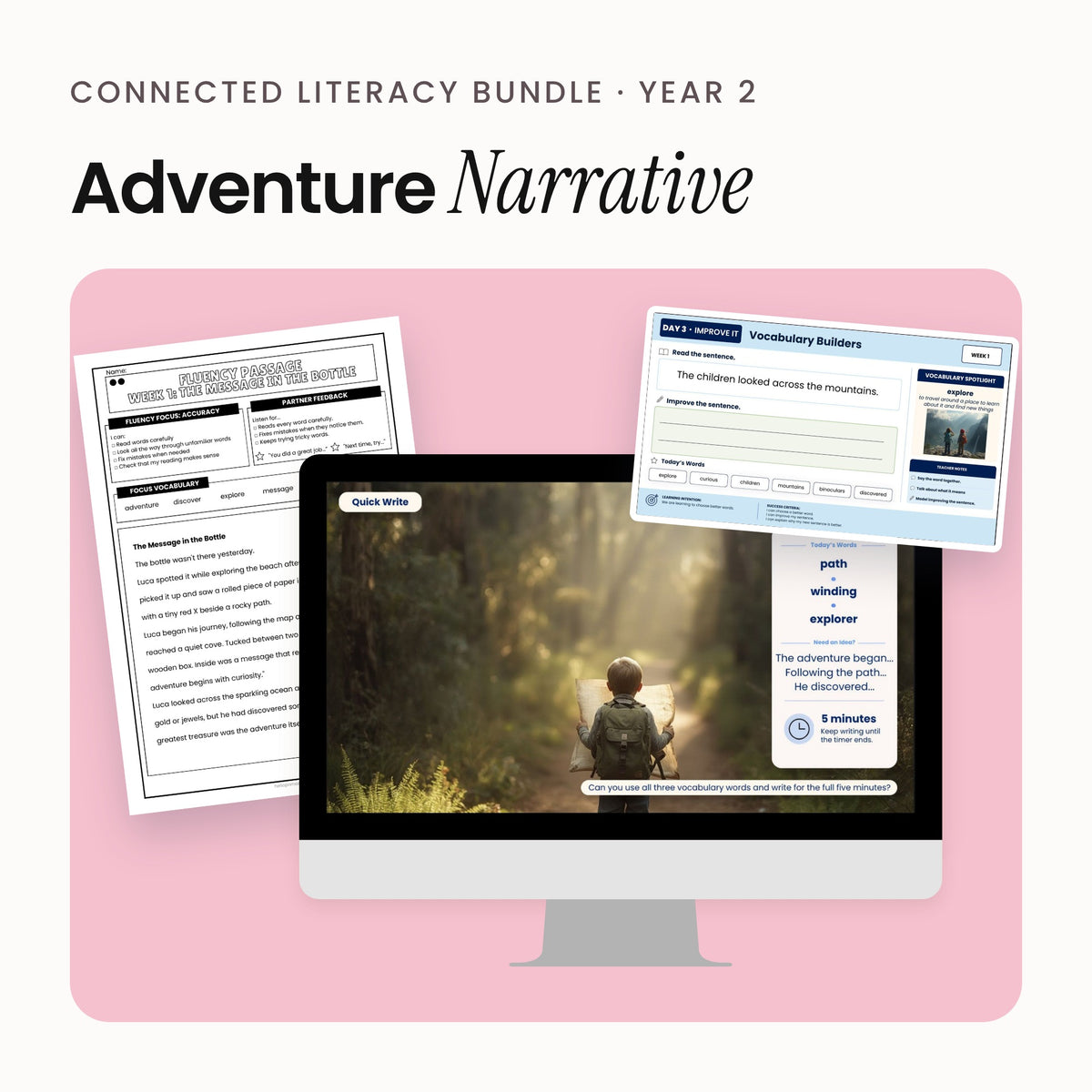
Use one routine on its own, or bring all three together. A connected literacy bundle gives you five weeks of all three routines on one theme.
No. 03 — A week in the classroom
What a week can look like
Here's one way to run the connected literacy block across a week, in about 30 to 35 minutes a day. The times are a guide only, so adjust them to suit your class and your timetable.
| Day | ReadReading Fluency10–15 minutes | PractiseSentence of the DayAbout 10 minutes | ApplyQuick WritesAbout 10 minutes |
|---|---|---|---|
| Monday | Model and choral read | Capitals and punctuation | Five-minute Quick Write, then share |
| Tuesday | Echo read | Combining sentences | Five-minute Quick Write, then share |
| Wednesday | Partner read, words correct per minute check-in and goal setting | Vocabulary precision | Five-minute Quick Write, then share |
| Thursday | Fluency goal practice, words correct per minute and reflection | Adding detail | Five-minute Quick Write, then share |
| Friday | Flexible: catch up, conference with students or revisit the week's words | ||
Starting small? Begin with one routine and add the next once your class knows it well. Each routine also works on its own.
No. 04 — Curriculum links
Where it sits in the curriculum
The routines address these outcomes from the NSW English K–10 Syllabus (2022) and these content descriptions from the Australian Curriculum: English v9.0.
NSW English K–10 Syllabus
| Routine | Stage 2Years 3–4 | Stage 3Years 5–6 |
|---|---|---|
| Reading Fluency | EN2-REFLU-01Reading fluencyEN2-VOCAB-01Vocabulary | EN3-RECOM-01Reading and comprehensionEN3-VOCAB-01Vocabulary |
| Sentence of the Day | EN2-VOCAB-01VocabularyEN2-CWT-01, 02, 03Creating written texts: sentence-level grammar and punctuation | EN3-VOCAB-01VocabularyEN3-CWT-01Creating written texts: sentence-level grammar and punctuation |
| Quick Writes | EN2-CWT-01, 02, 03Creating written texts for imaginative, informative and persuasive purposesEN2-VOCAB-01Vocabulary | EN3-CWT-01Creating written texts for multiple purposes and audiencesEN3-VOCAB-01Vocabulary |
Australian Curriculum: English v9.0
| Routine | Years 3–4Year 3 · Year 4 | Years 5–6Year 5 · Year 6 |
|---|---|---|
| Reading Fluency | AC9E3LY04 · AC9E4LY04Reading texts accurately and fluentlyAC9E3LA10 · AC9E4LA11Extending vocabulary | AC9E5LY04 · AC9E6LY04Reading texts for a purpose and monitoring meaningAC9E5LA08 · AC9E6LA08Vocabulary for precision and effect |
| Sentence of the Day | AC9E3LA06 · AC9E4LA06Clauses and complex sentencesAC9E3LA10 · AC9E4LA11Extending vocabulary | AC9E5LA05 · AC9E6LA05Complex sentences and embedded clausesAC9E5LA06Expanding noun groupsAC9E5LA08 · AC9E6LA08Vocabulary for precision and effect |
| Quick Writes | AC9E3LY06 · AC9E4LY06Planning, creating and editing written texts | AC9E5LY06 · AC9E6LY06Planning, creating and editing written texts |
In Stage 3, reading fluency is taught within the NSW Reading and comprehension outcome. The Australian Curriculum has no fluency-specific content description in Years 5 and 6, so the closest reading description is listed. Year 2 resources link to the matching Stage 1 outcomes and Year 2 content descriptions.
Connected literacy bundles
Five weeks of Reading Fluency, Sentence of the Day and Quick Writes on one theme, in one bundle.
Literacy, Unpacked
Keep exploring
Reading fluency
What fluent reading sounds like and how to run a four-day routine with three levels of one passage.
Spelling & vocabulary
A four-lesson weekly sequence for vocabulary, spelling and Sentence of the Day.
Quick Writes & Daily Review
Short daily routines that keep every student writing and revisiting skills.
- Coming soon
Reading comprehension
Literal and inferential understanding, thinking routines and measuring growth.
- Coming soon
Teaching writing
Explicit mini lessons, mentor sentences, revising and editing, and matched writing assessments.