
Literacy, Unpacked · Practical guide
Reading fluency, unpacked
What fluent reading is, why repeated reading works and how to run a simple weekly routine where every student reads the same story at the right level of challenge.
What you'll learn
- What fluent reading sounds like: accuracy, automaticity, rate and prosody
- Why guided repeated reading builds fluency and comprehension
- How to run a four-day fluency routine with three levels of one passage
- How to track progress with words correct per minute and student goals
No. 01 — What fluency is
More than reading fast
Fluent readers read accurately, at a natural pace and with expression that matches the meaning of the text. The NSW English K–10 Syllabus describes fluency in four parts:
Accuracy: reading the words correctly.
Automaticity: recognising words quickly, without effortful decoding.
Rate: reading at a pace that suits the text and the purpose.
Prosody: reading with phrasing and expression, and paying attention to punctuation.
Fluency matters because it frees up attention. When students no longer have to work hard on every word, they can think about what the text means. That's why speed on its own isn't the goal. A fast reader who ignores punctuation and meaning isn't reading fluently.
No. 02 — Why repeated reading works
Read it again, and again
Rereading the same text is one of the most effective ways to build fluency. With guidance and feedback, students' accuracy, pace and expression improve. And because they're spending less effort on the words, their understanding of the text improves too. It works for confident readers and for readers who are still building their skills.
The important word is guidance. Rereading works best when students know what they're working on and get feedback on it. That's why each week of the routine has one clear fluency focus, and why modelling, echo reading and partner feedback are built in.
No. 03 — The weekly routine
Four days, one passage
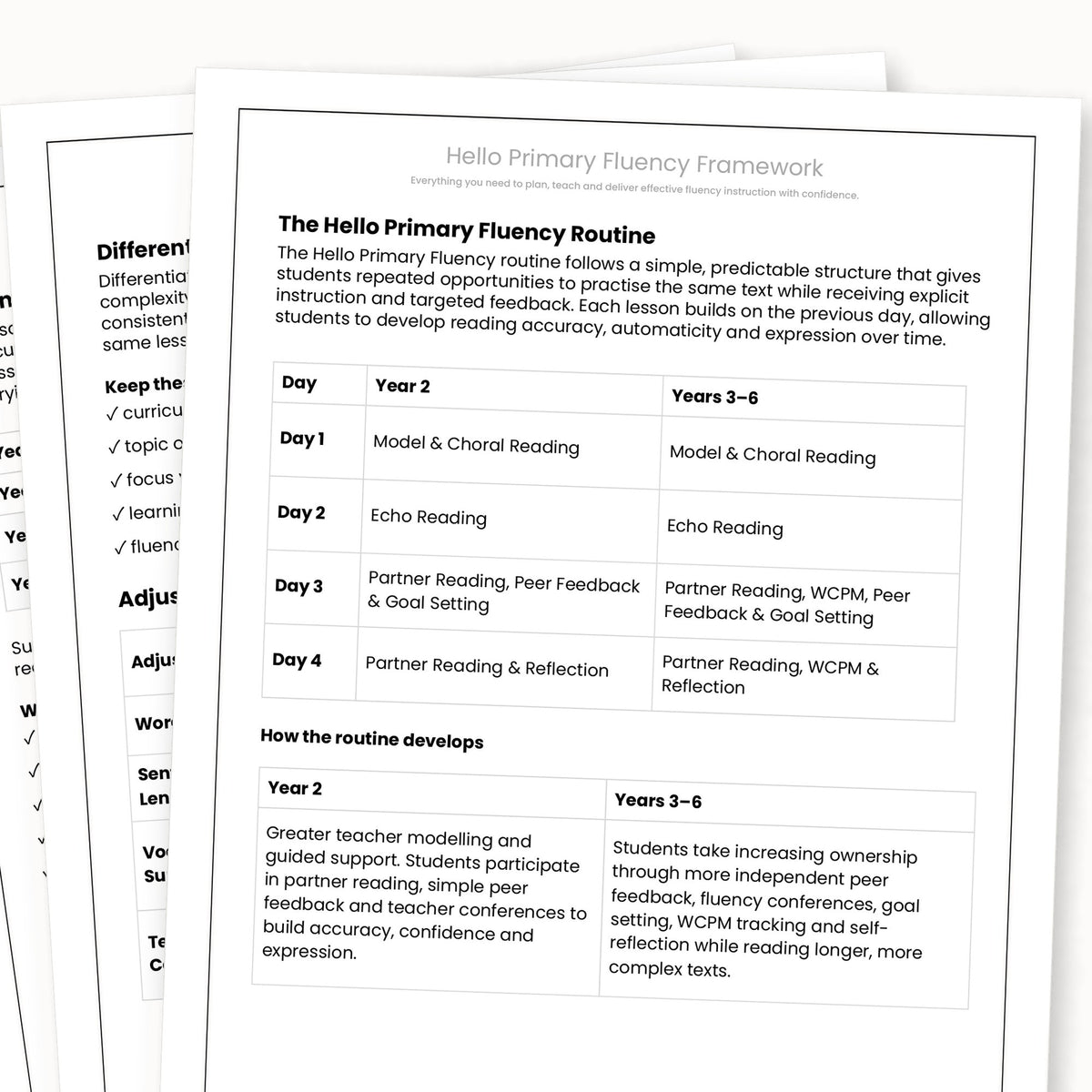
Each week, students read one short passage across four days. Each day uses a different kind of reading, moving from teacher modelling to independent practice.
| Day | What happens | Why it helps |
|---|---|---|
| Day 1 | Model and choral read. The teacher reads the passage aloud, then reads it together with students. Students highlight the week's vocabulary. | Students hear what fluent reading sounds like before they try it. |
| Day 2 | Echo read. The teacher reads a phrase or sentence and students echo it back. | Practises phrasing and expression in small, manageable chunks. |
| Day 3 | Partner read and check-in. Partners take turns reading. Students check their words correct per minute and set a goal. | Builds independence and gives every student a clear target. |
| Day 4 | Goal practice and reflection. Students practise towards their goal, check their words correct per minute again and reflect on their progress. | Students see their own growth across the week. |
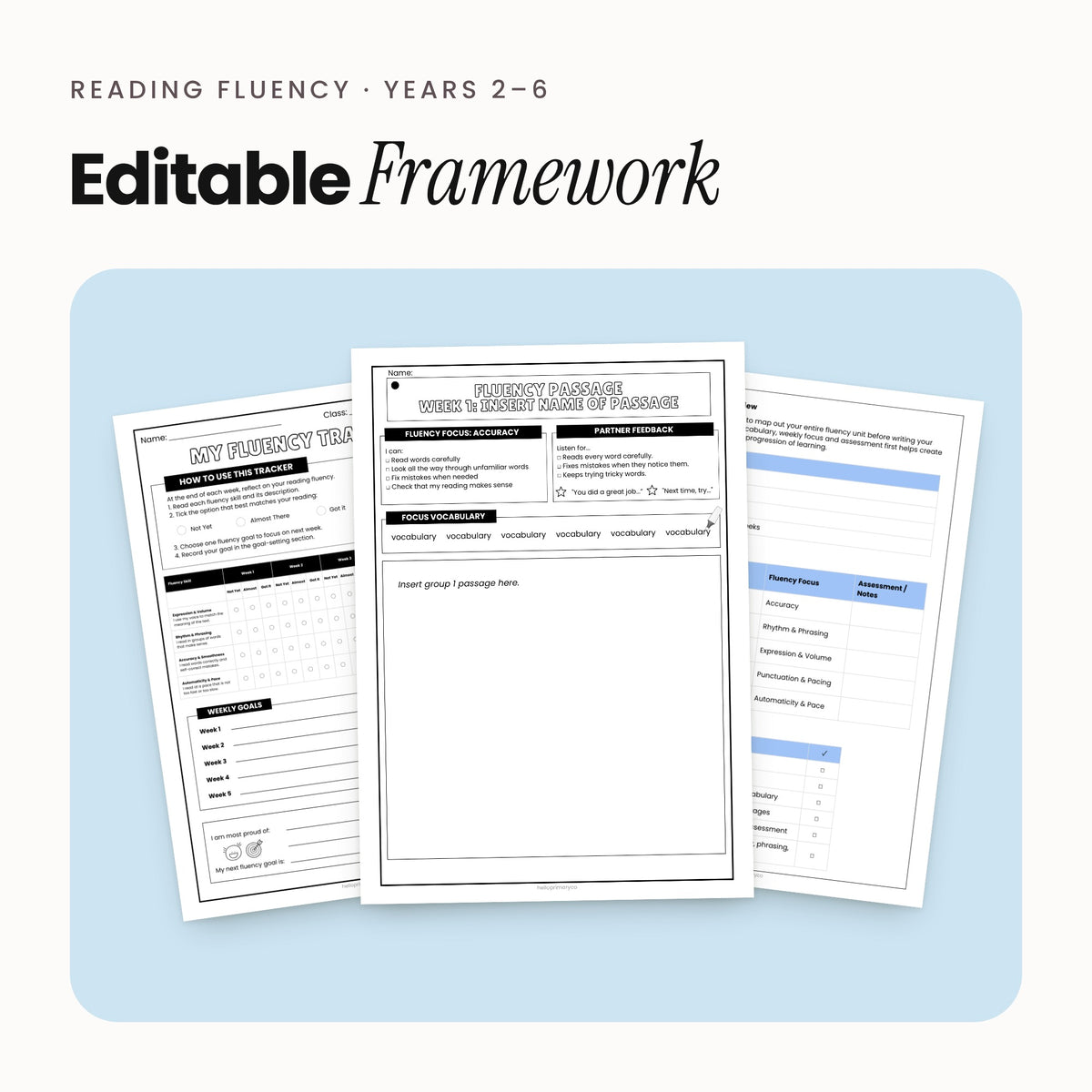
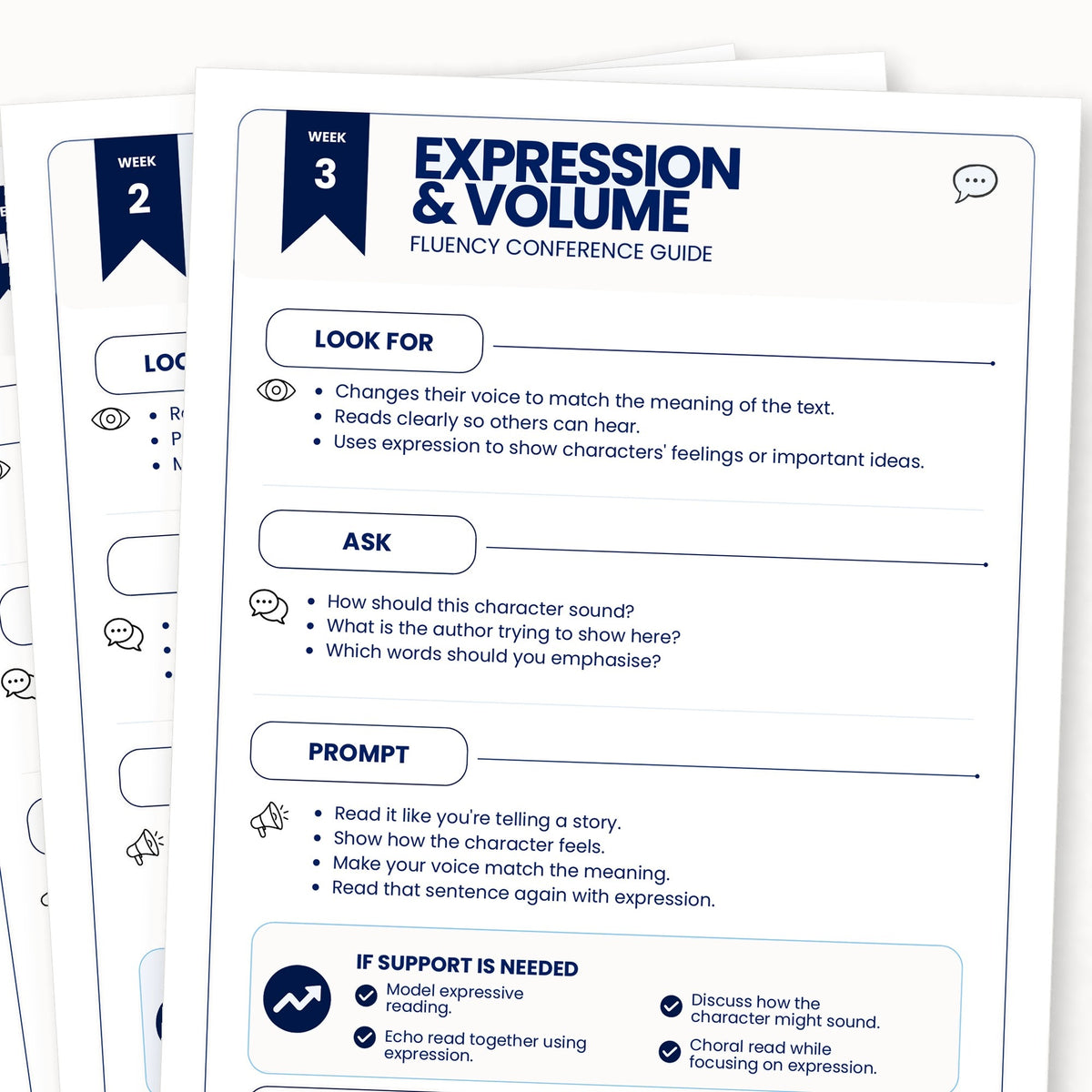
Five weeks, five focuses. Each week of a unit has its own fluency focus: Accuracy, Rhythm & Phrasing, Expression & Volume, Punctuation for Fluency, then Automaticity & Pace.
No. 04 — Three passages, one story
Everyone reads the same story
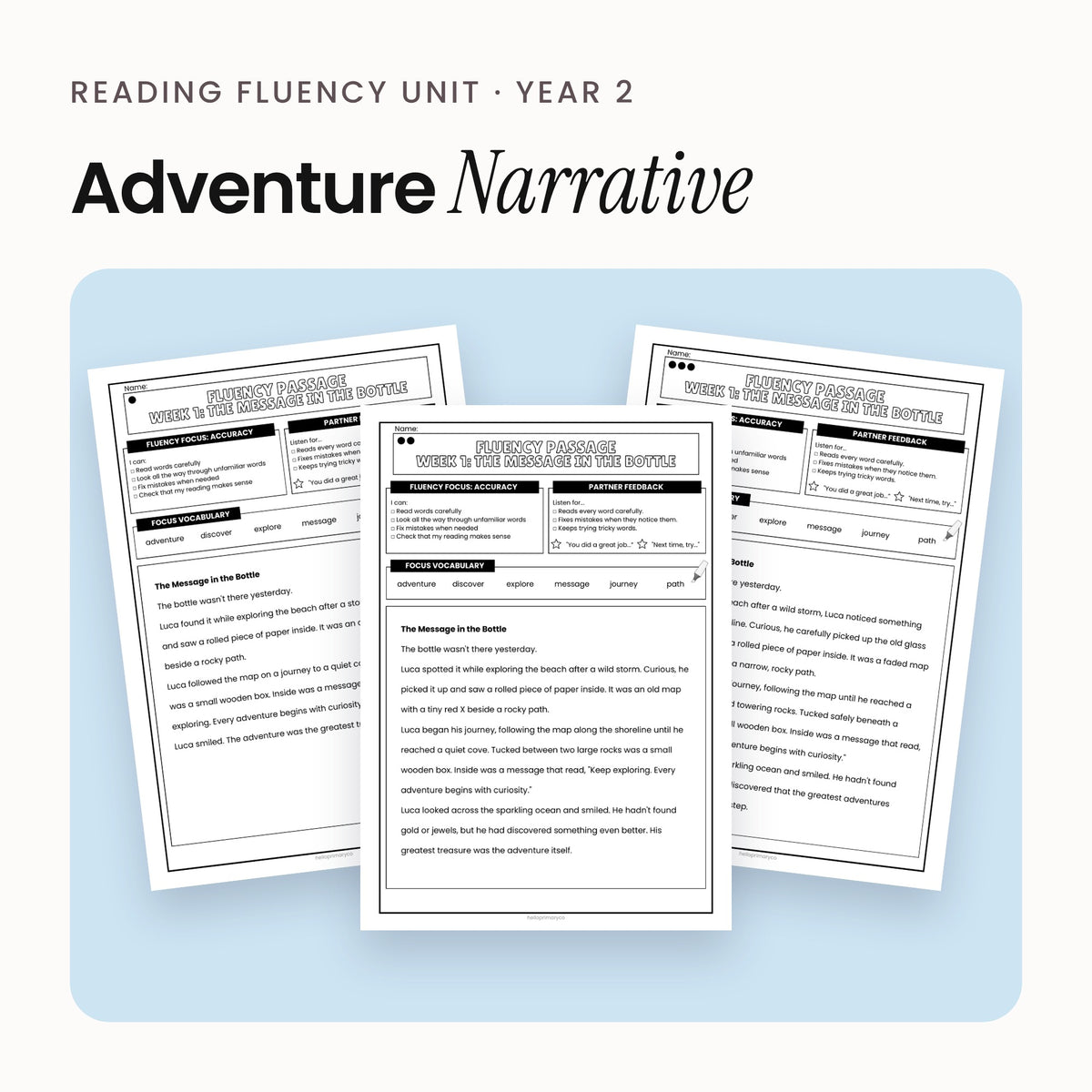
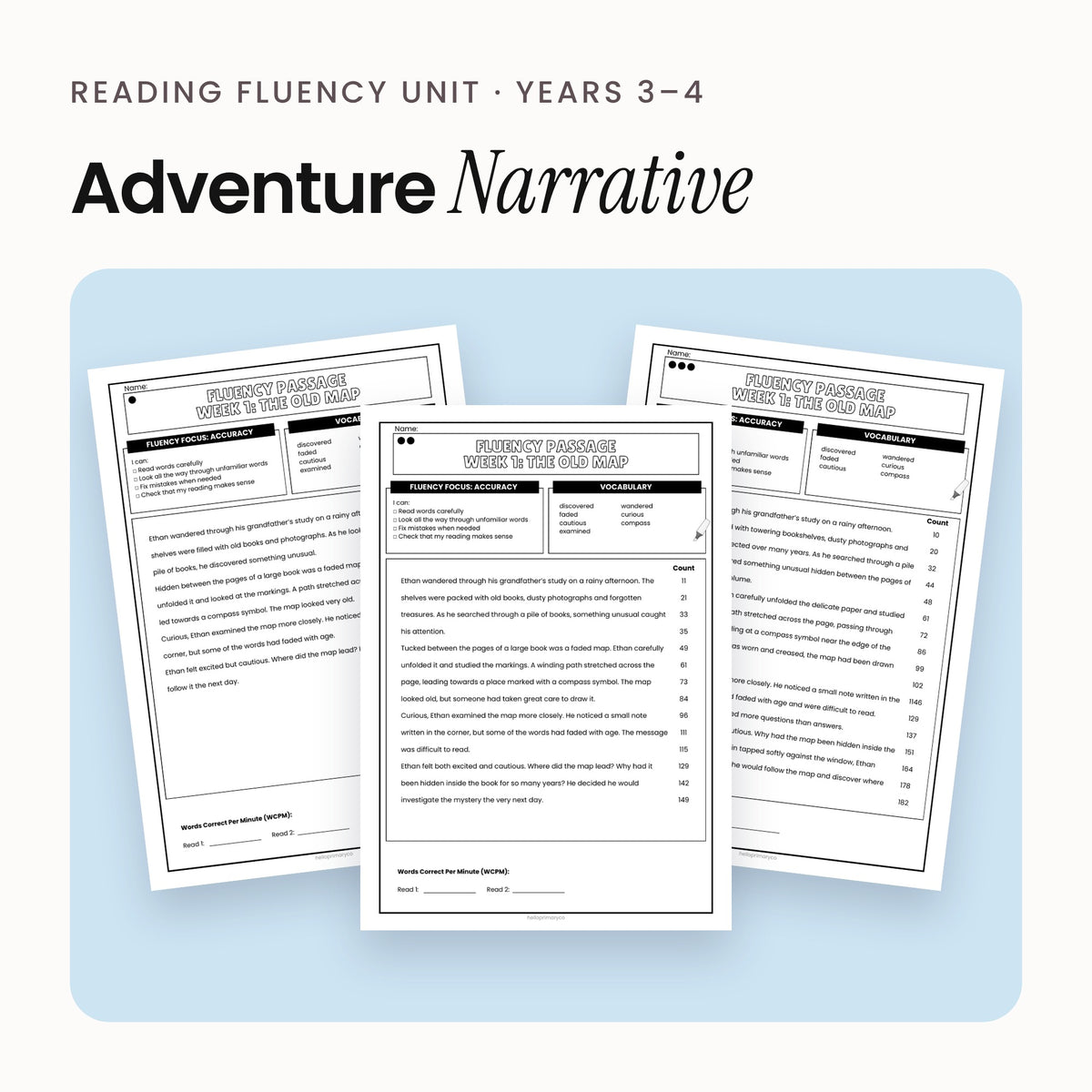
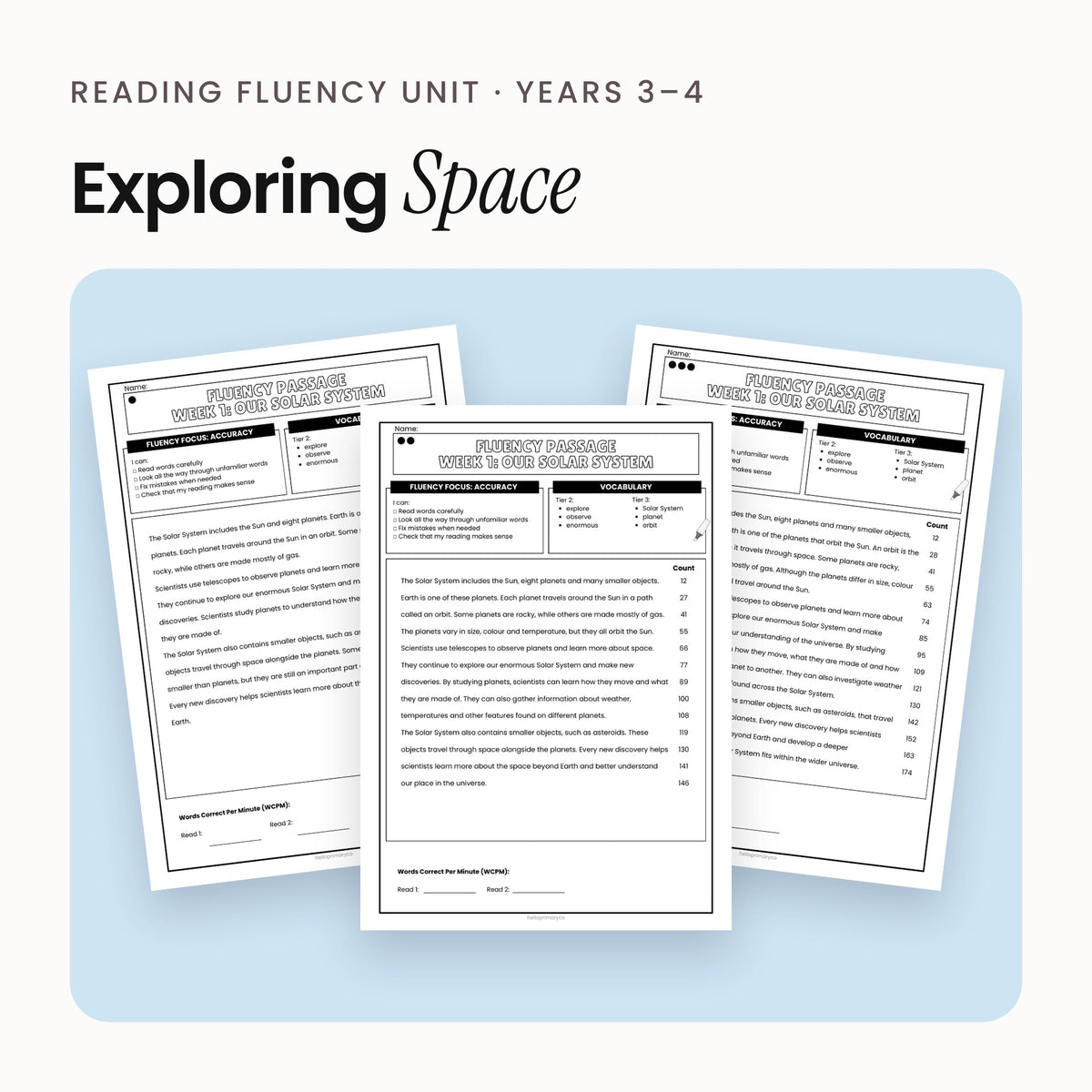
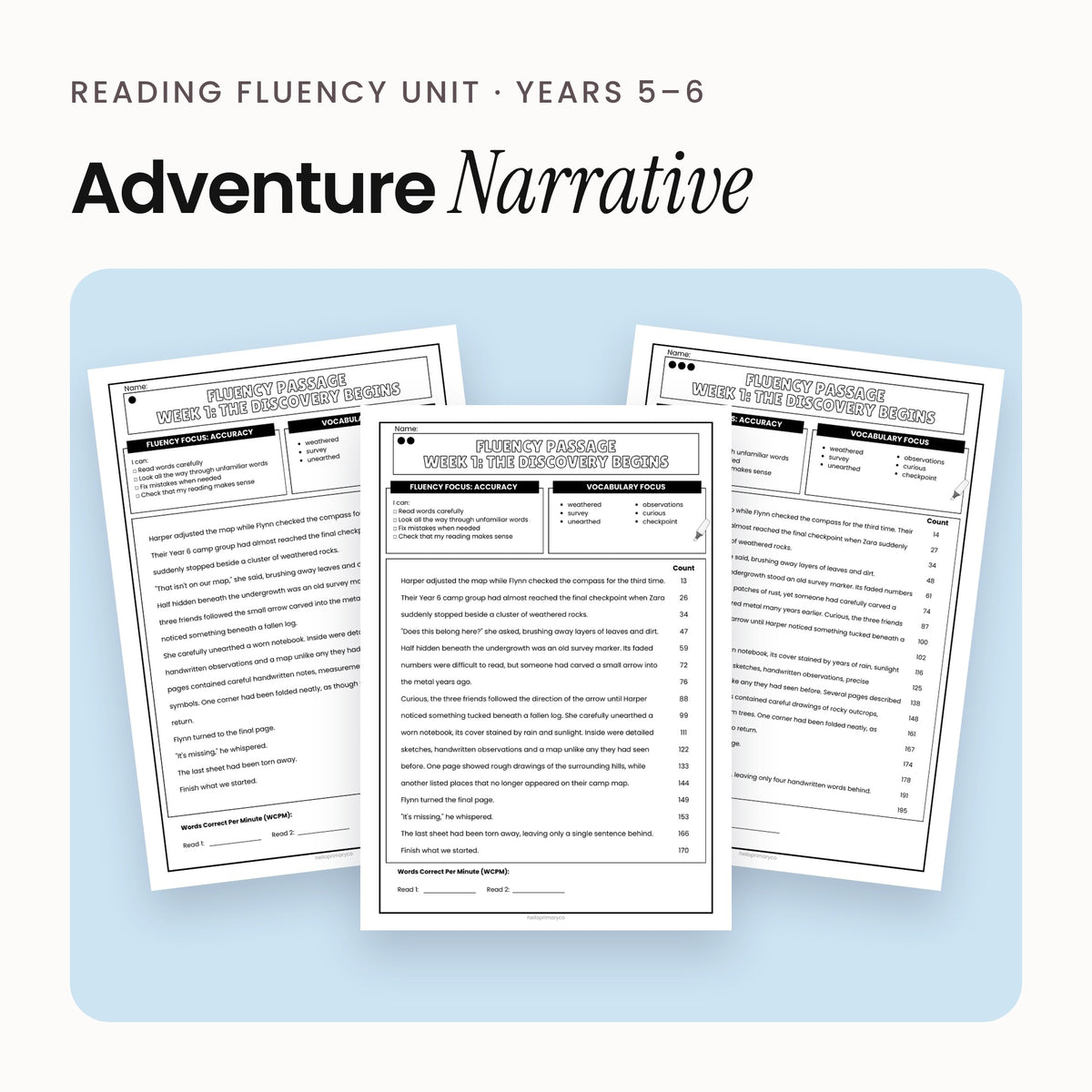
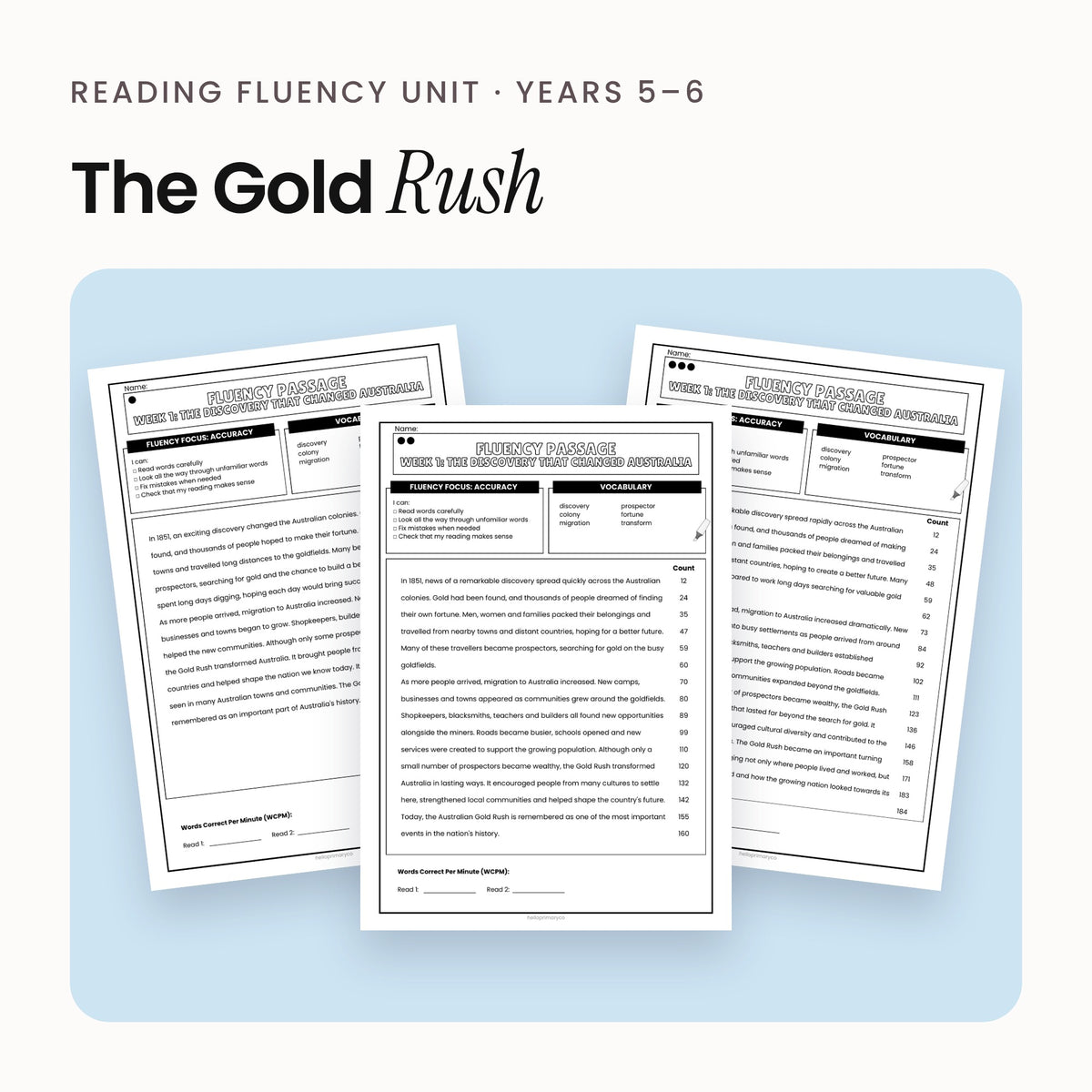
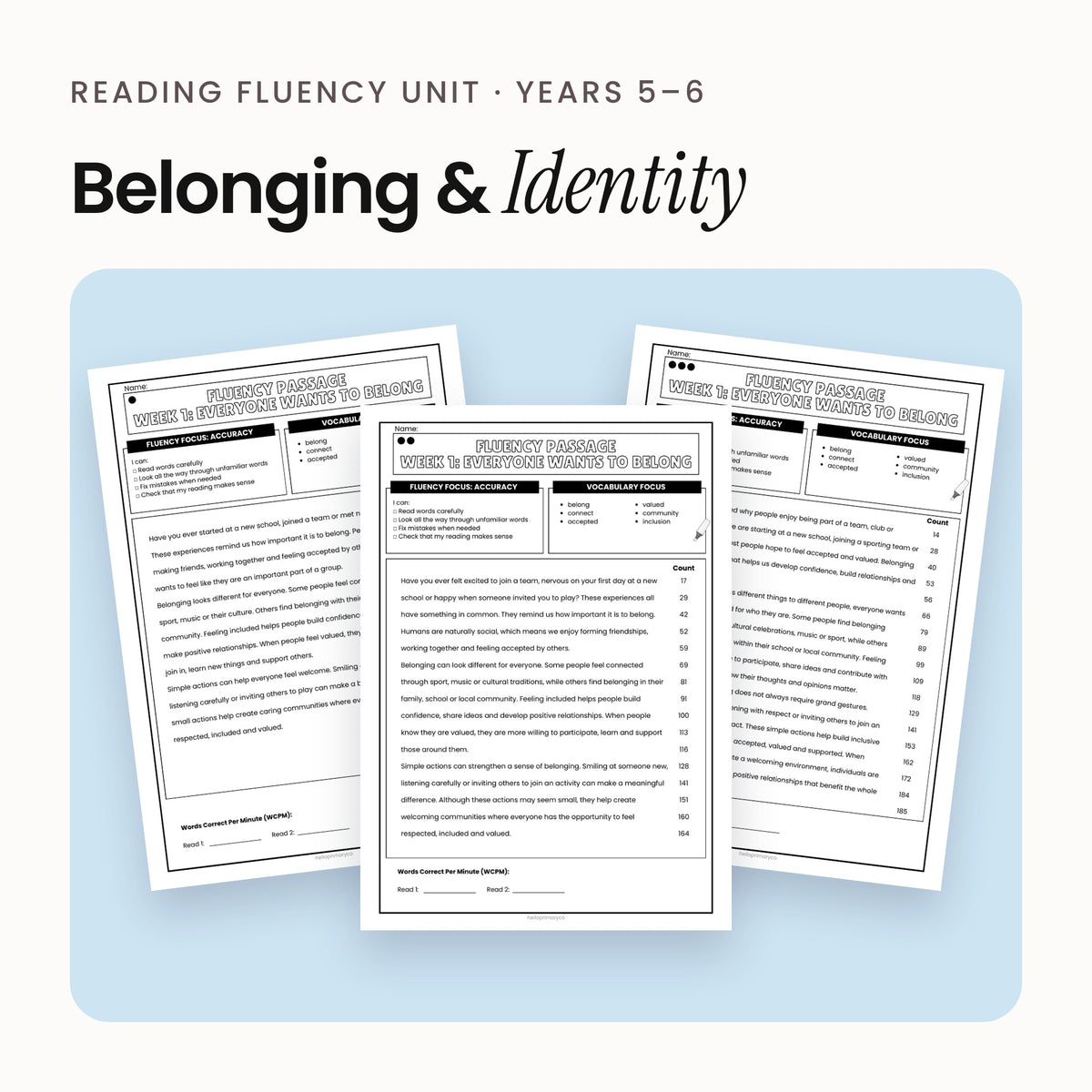
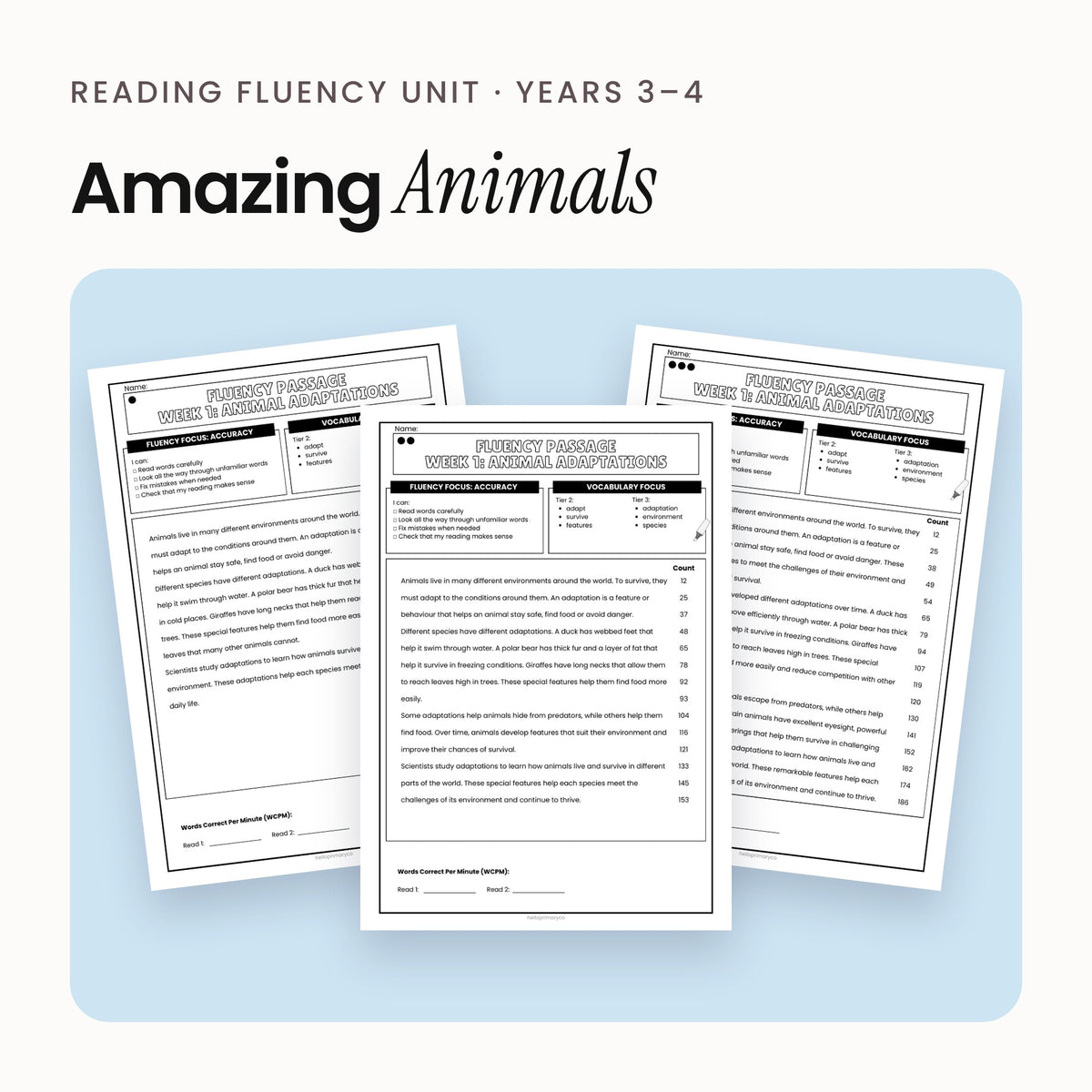
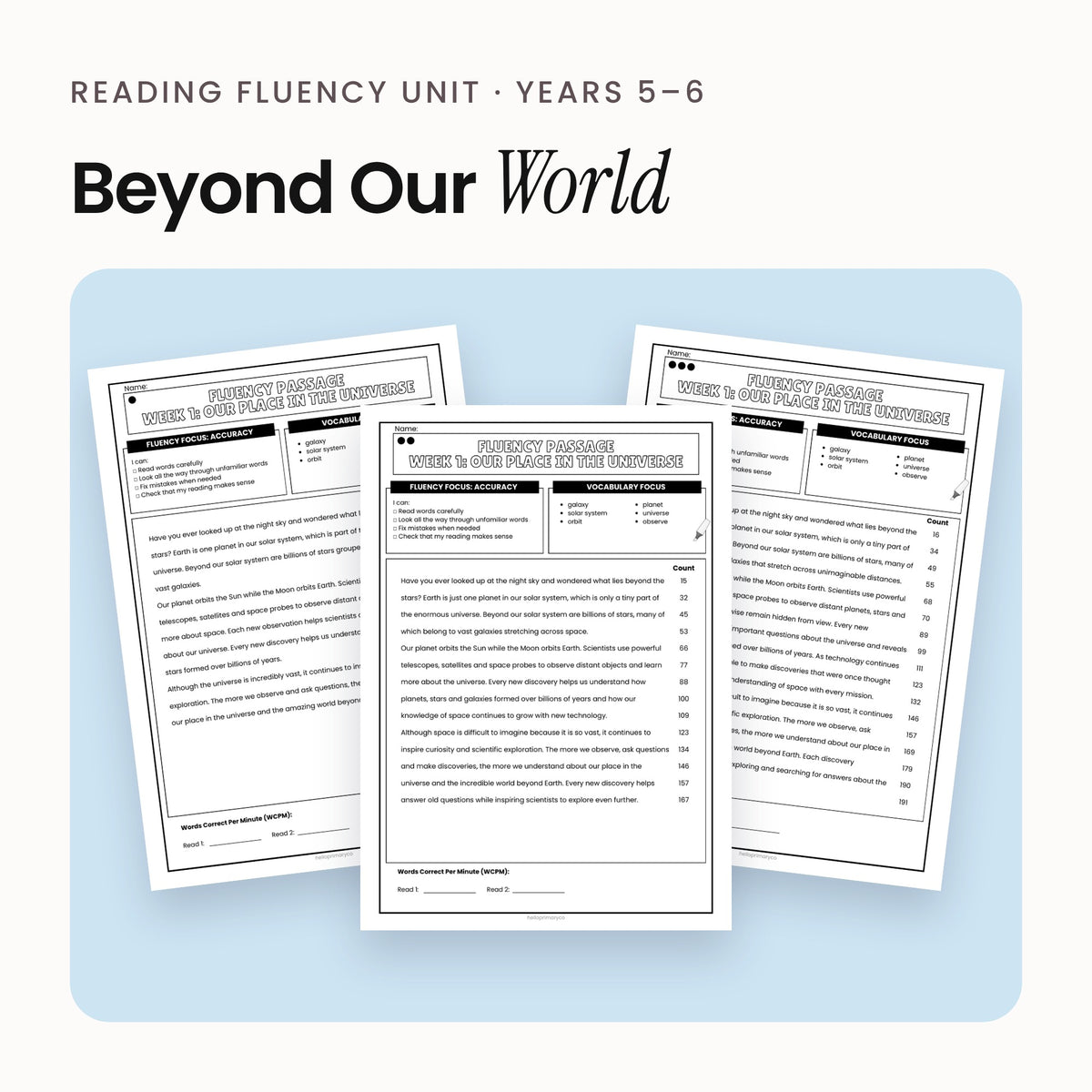
Each week's passage comes in three versions. The story and the vocabulary stay the same, but the length and complexity change. Every student works on the same text and talks about the same ideas, at a level that suits them.
On Day 1, one way to run it is in three groups. The teacher choral reads with one group while the other two reread their own version and highlight the vocabulary. The groups then rotate, so every group gets a turn with the teacher.
Because the vocabulary is shared, the whole class can take the same words into Sentence of the Day and Quick Writes later in the week.
No. 05 — Tracking progress
Small goals, visible growth
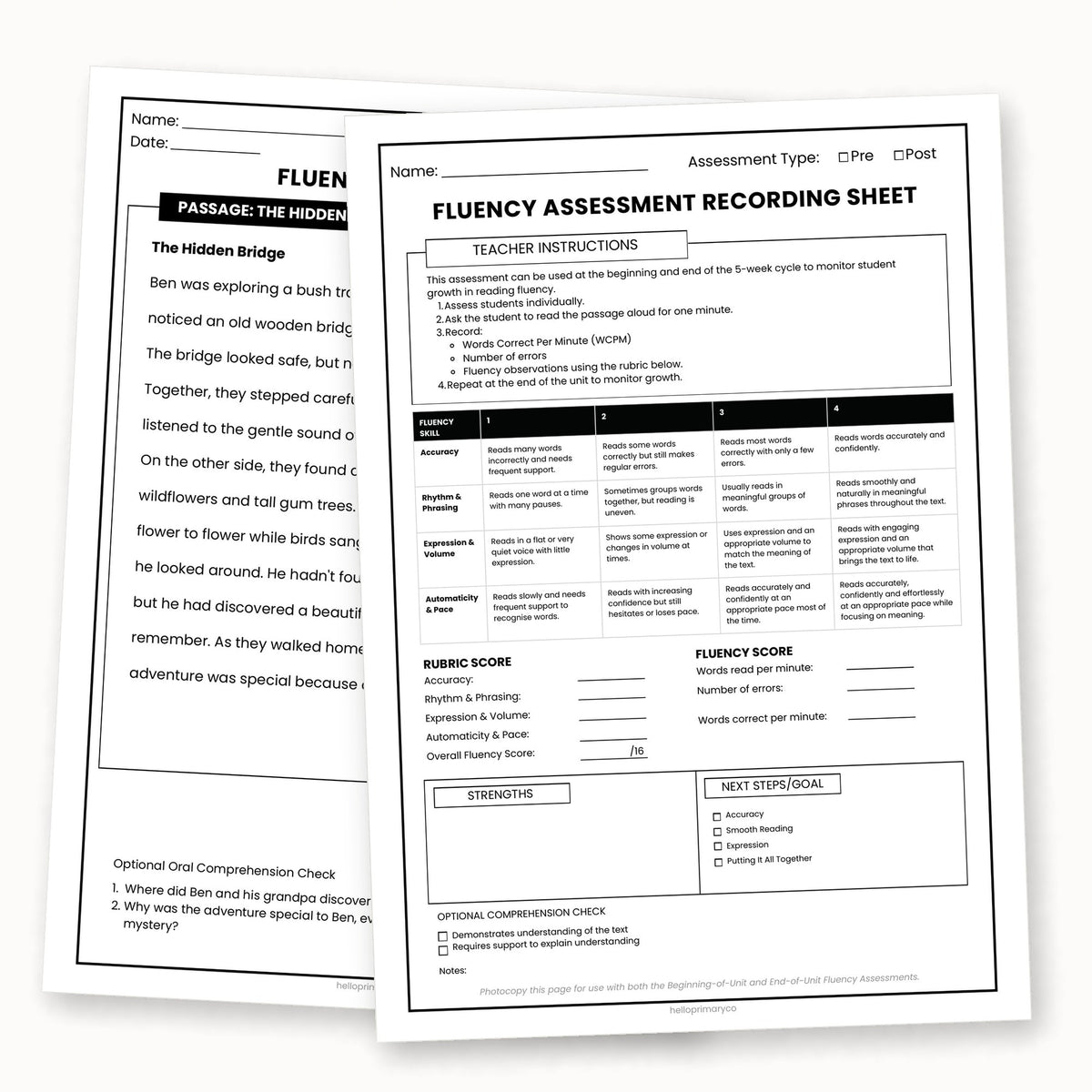
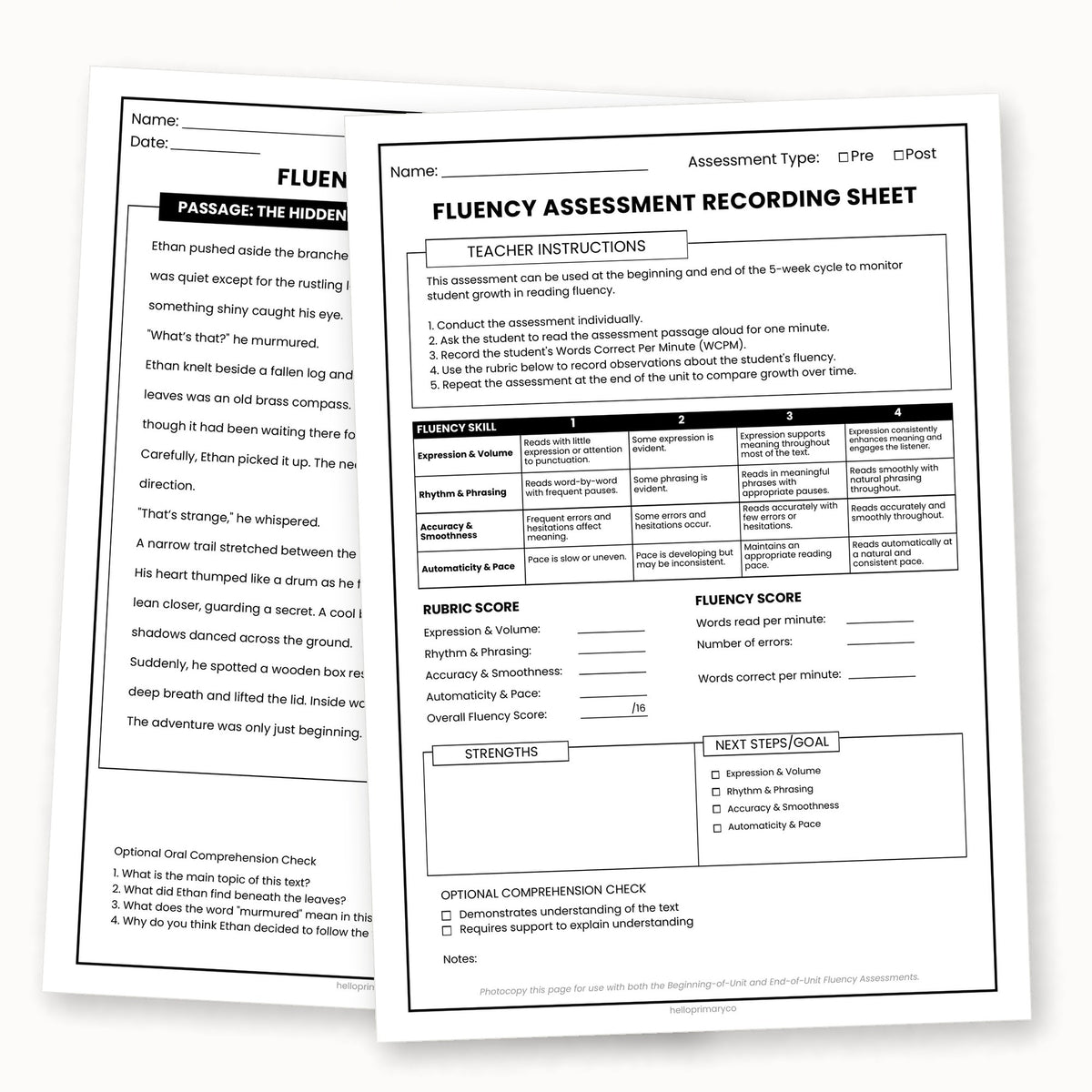
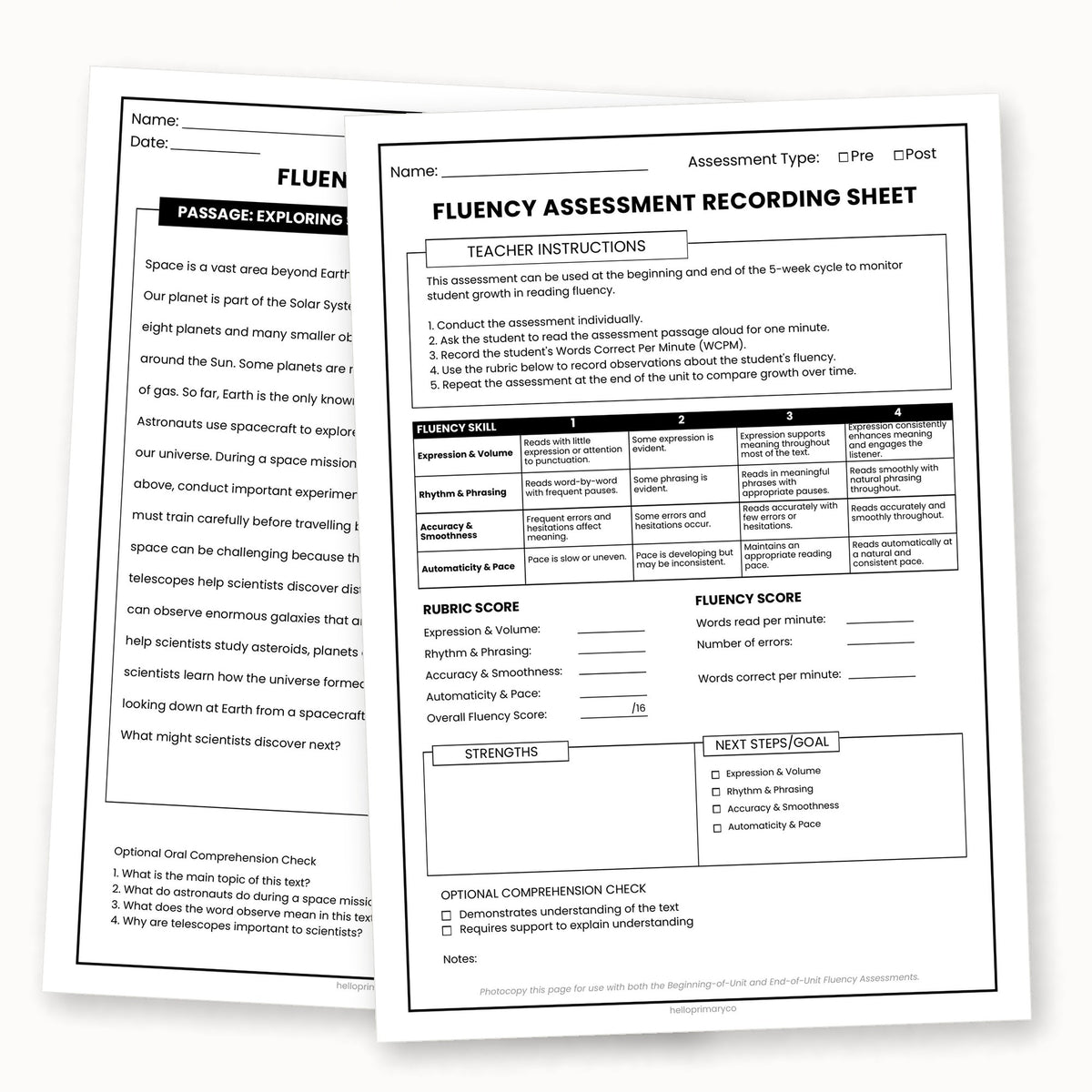
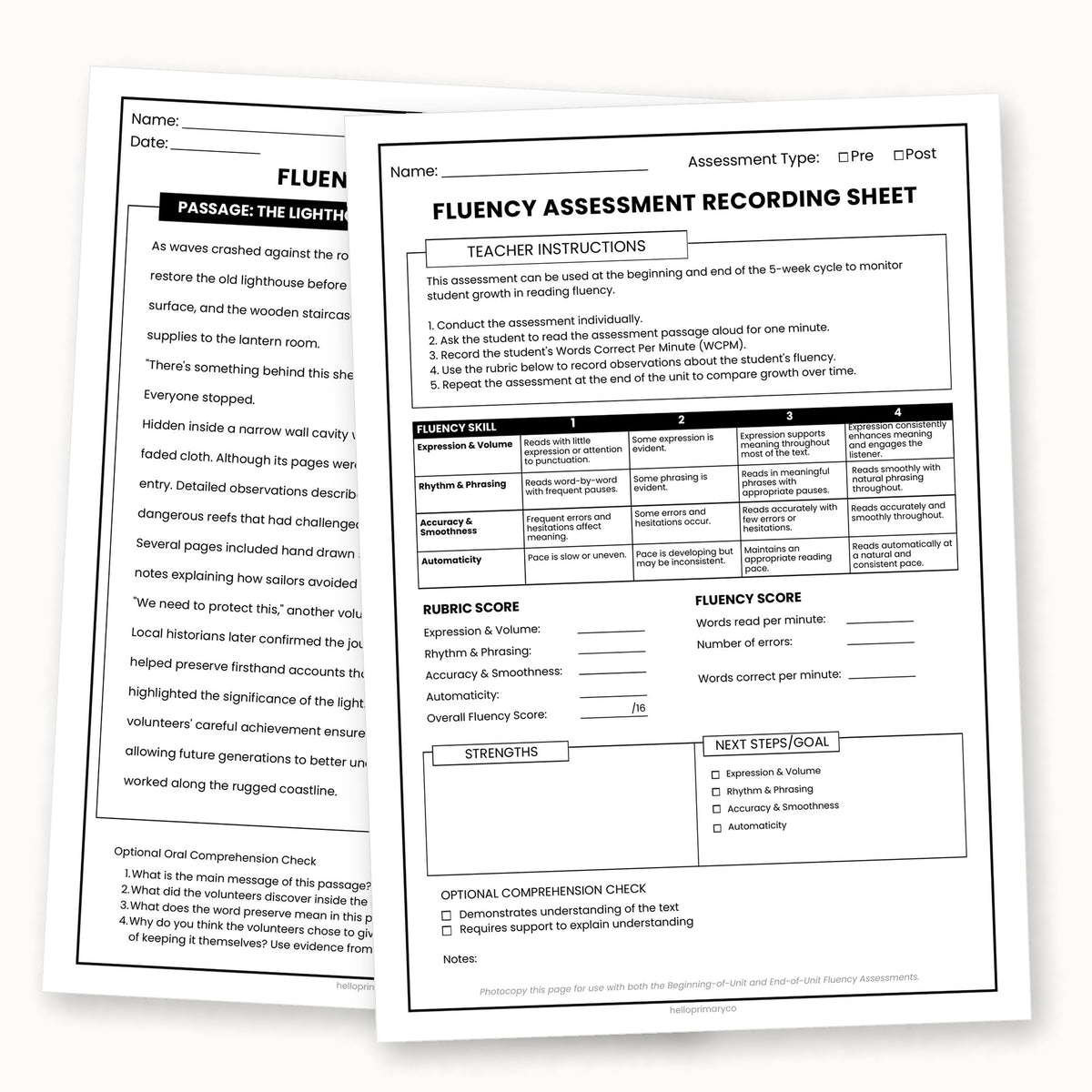
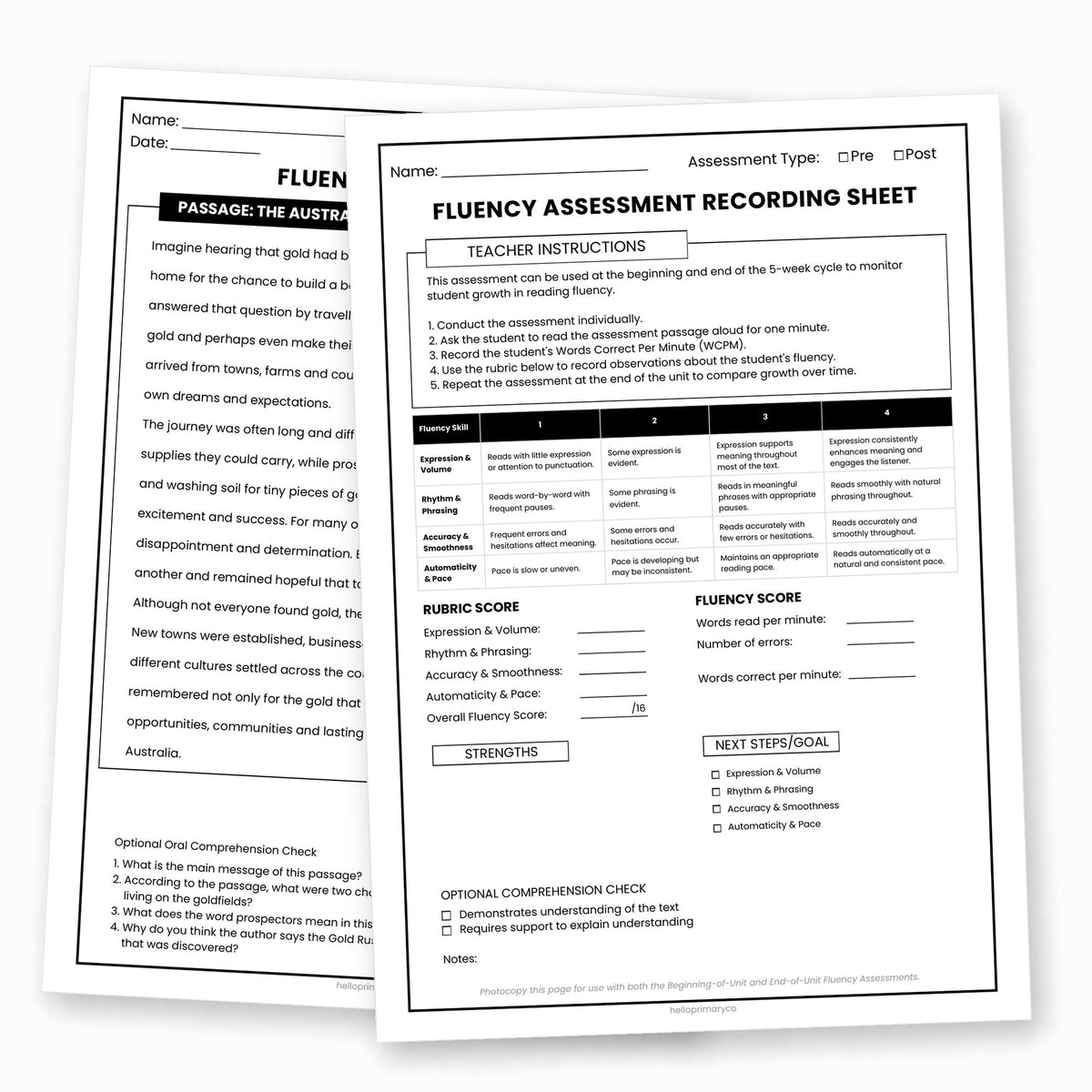
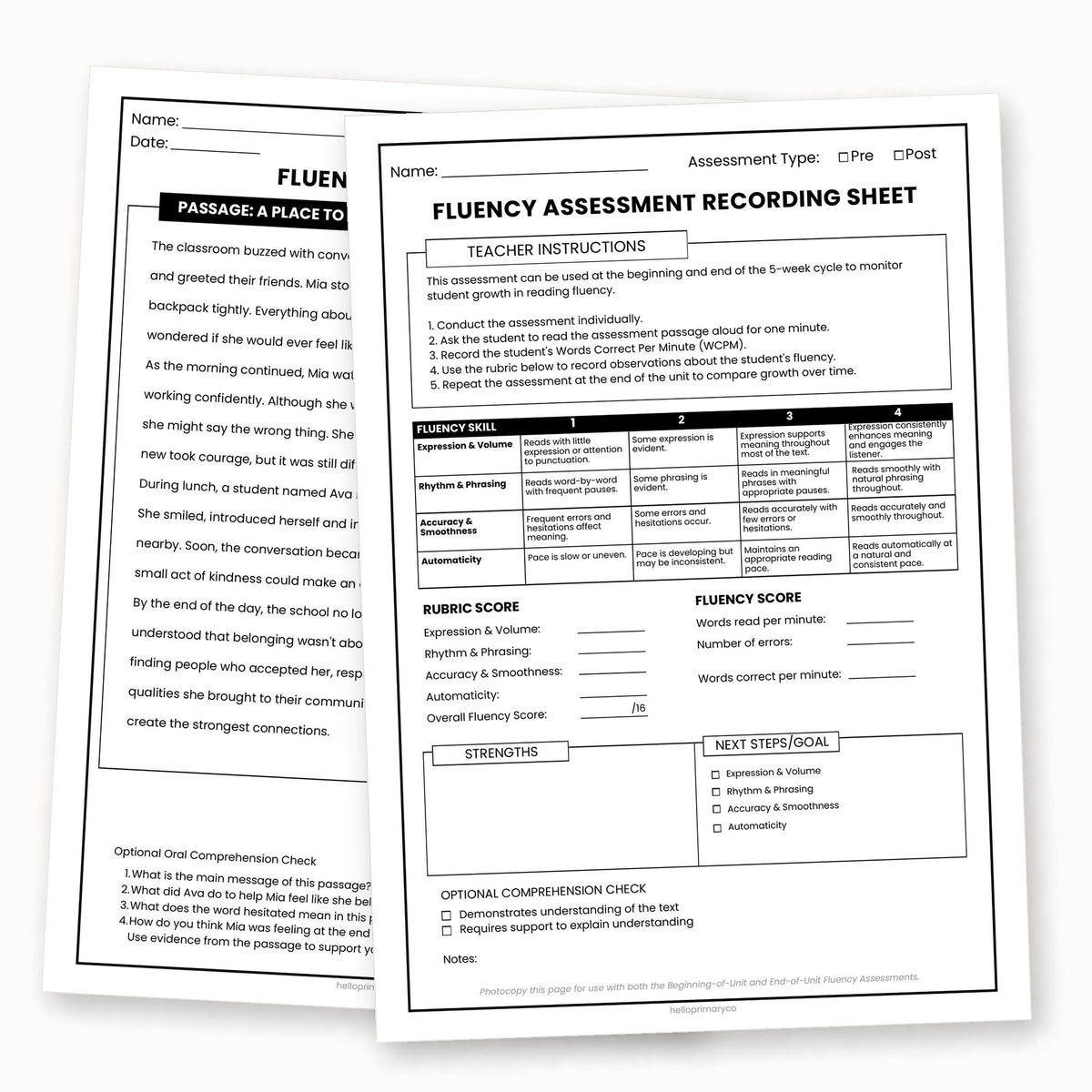
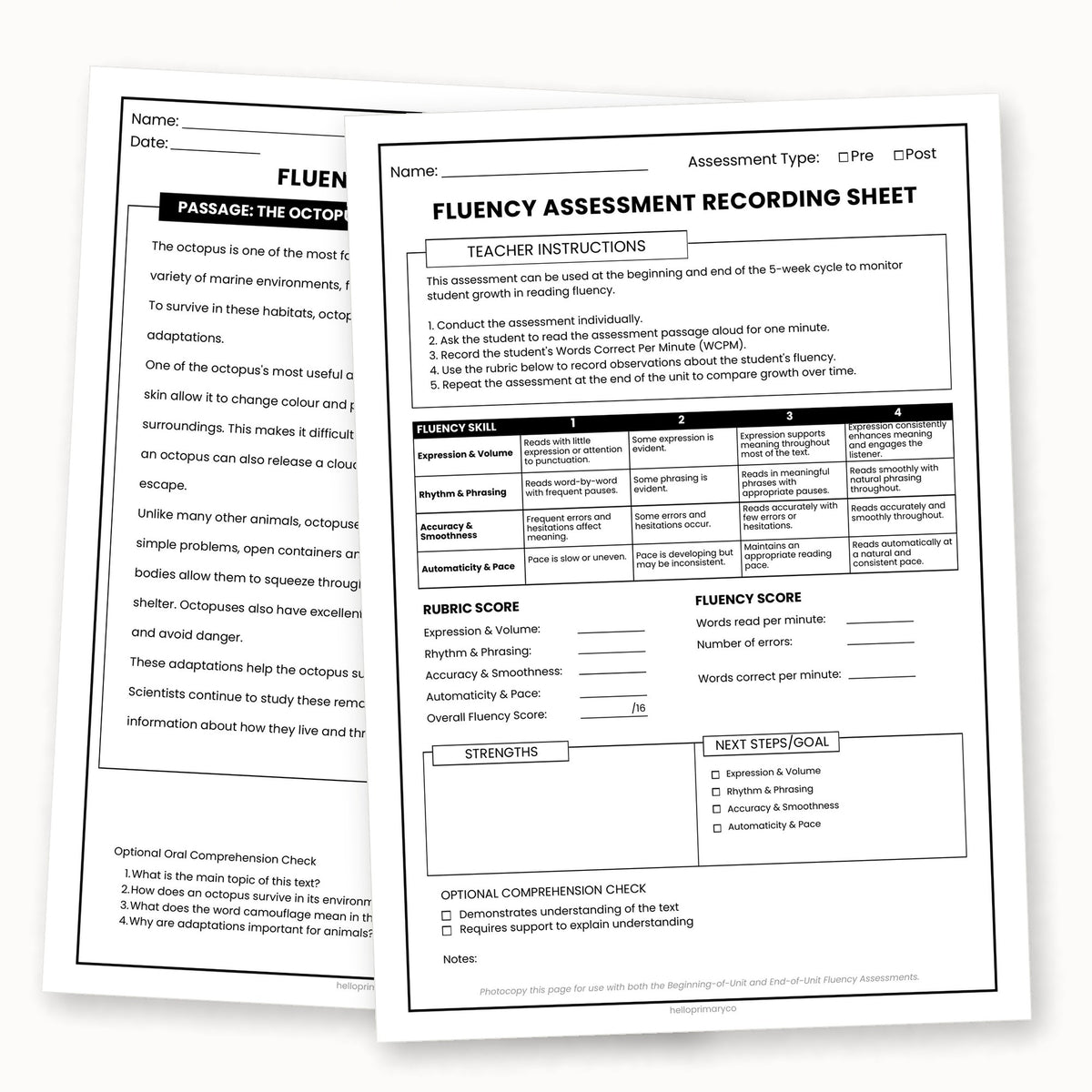
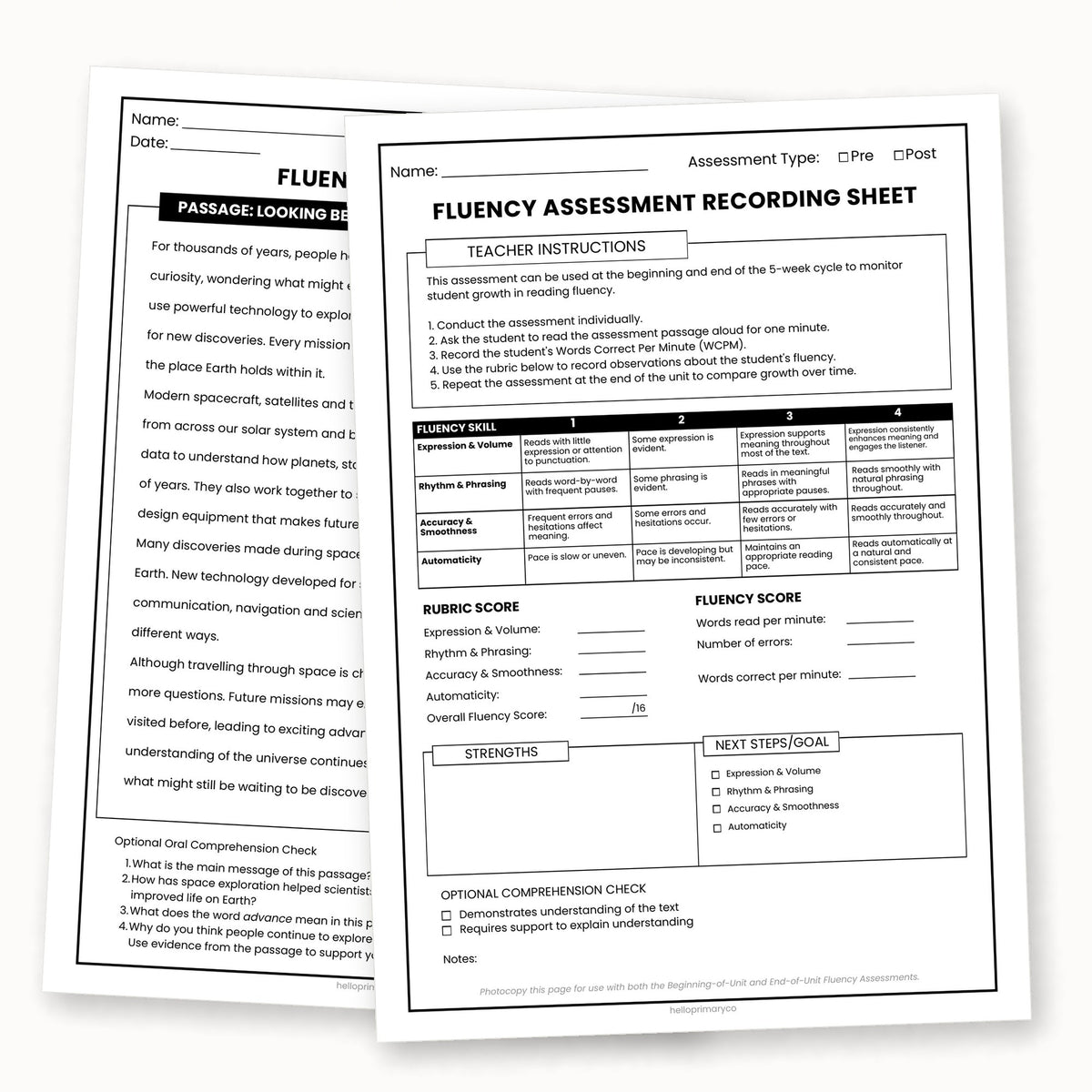
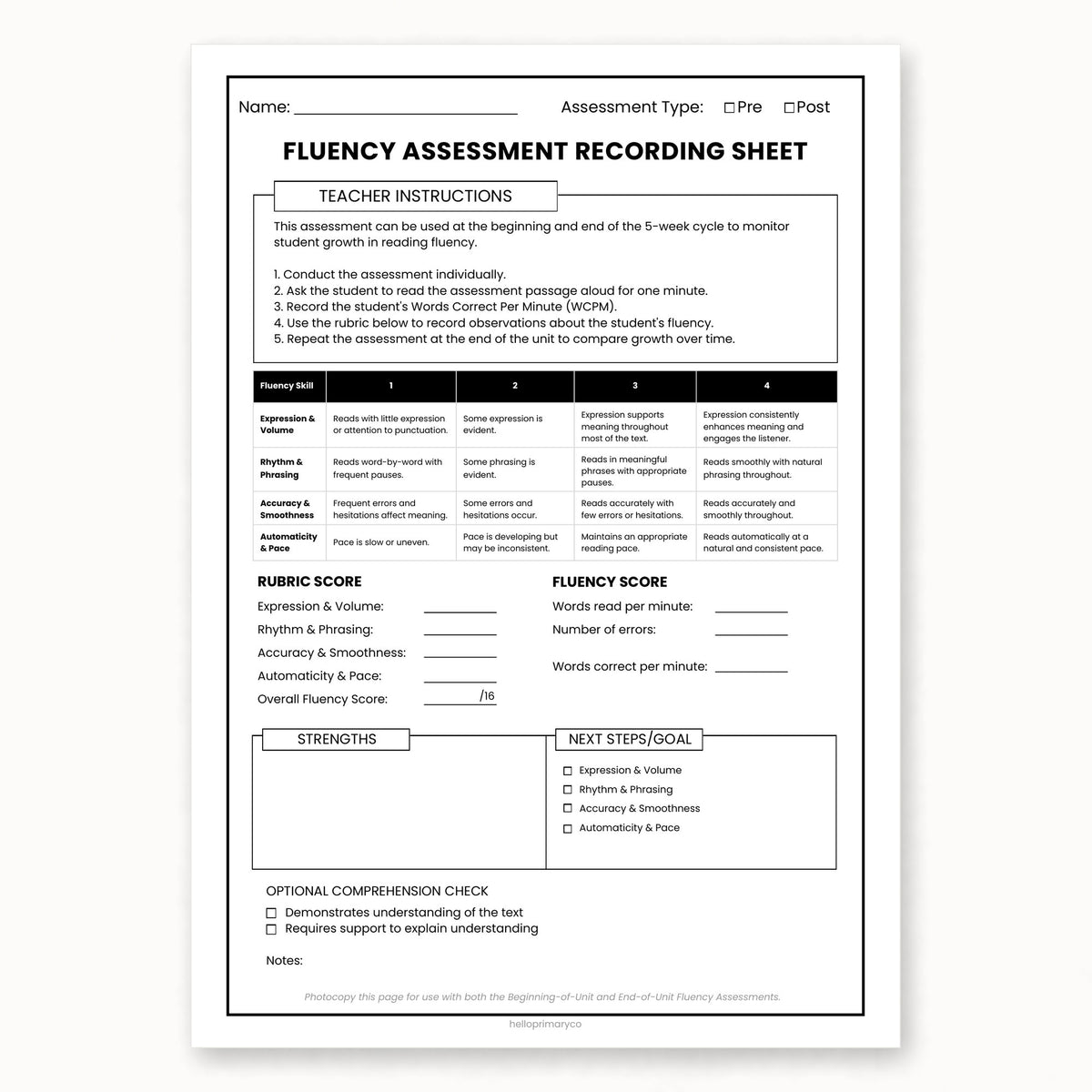
Words correct per minute (WCPM) is a quick measure of accuracy and rate. A student reads aloud for one minute while you note any errors, then you subtract the errors from the total number of words read.
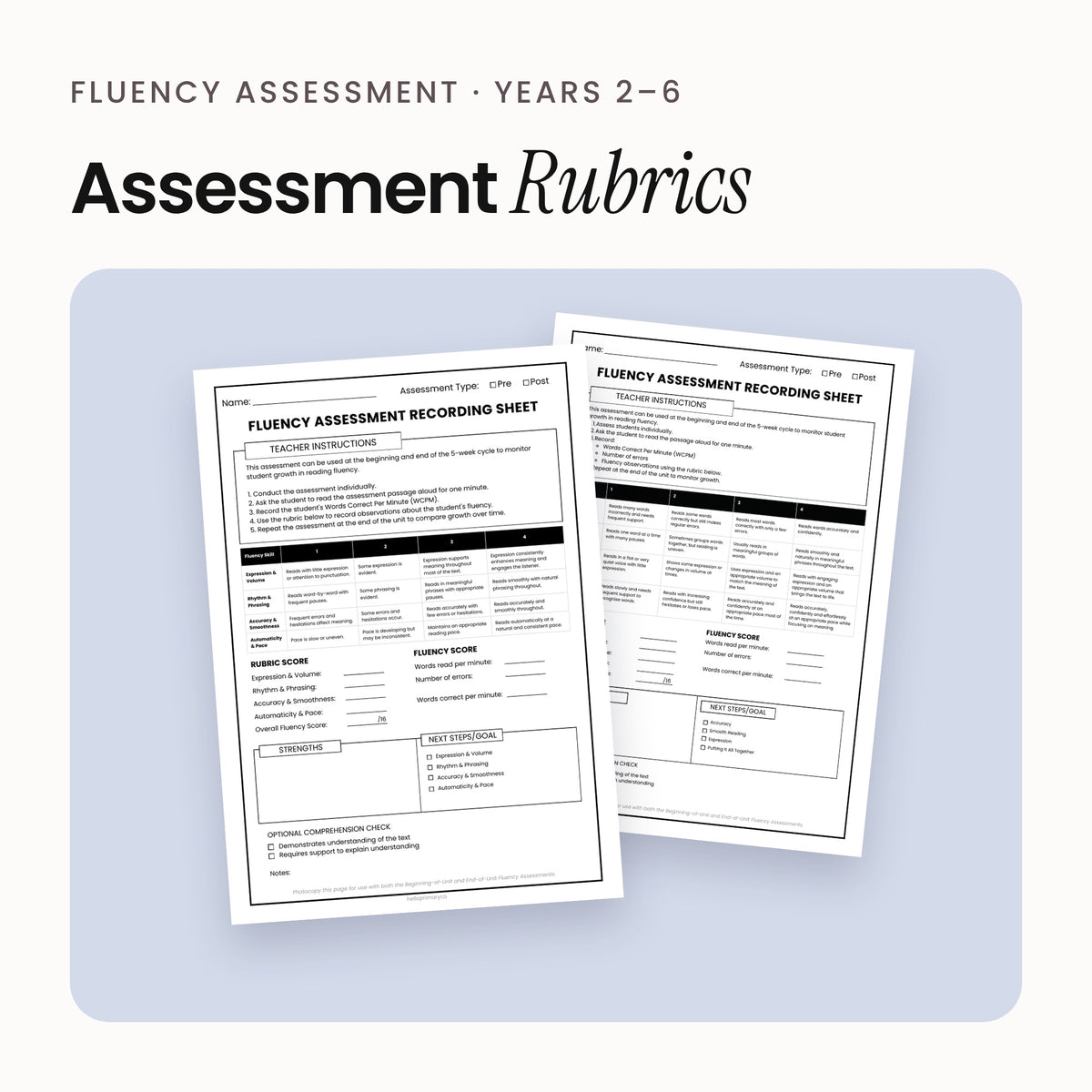
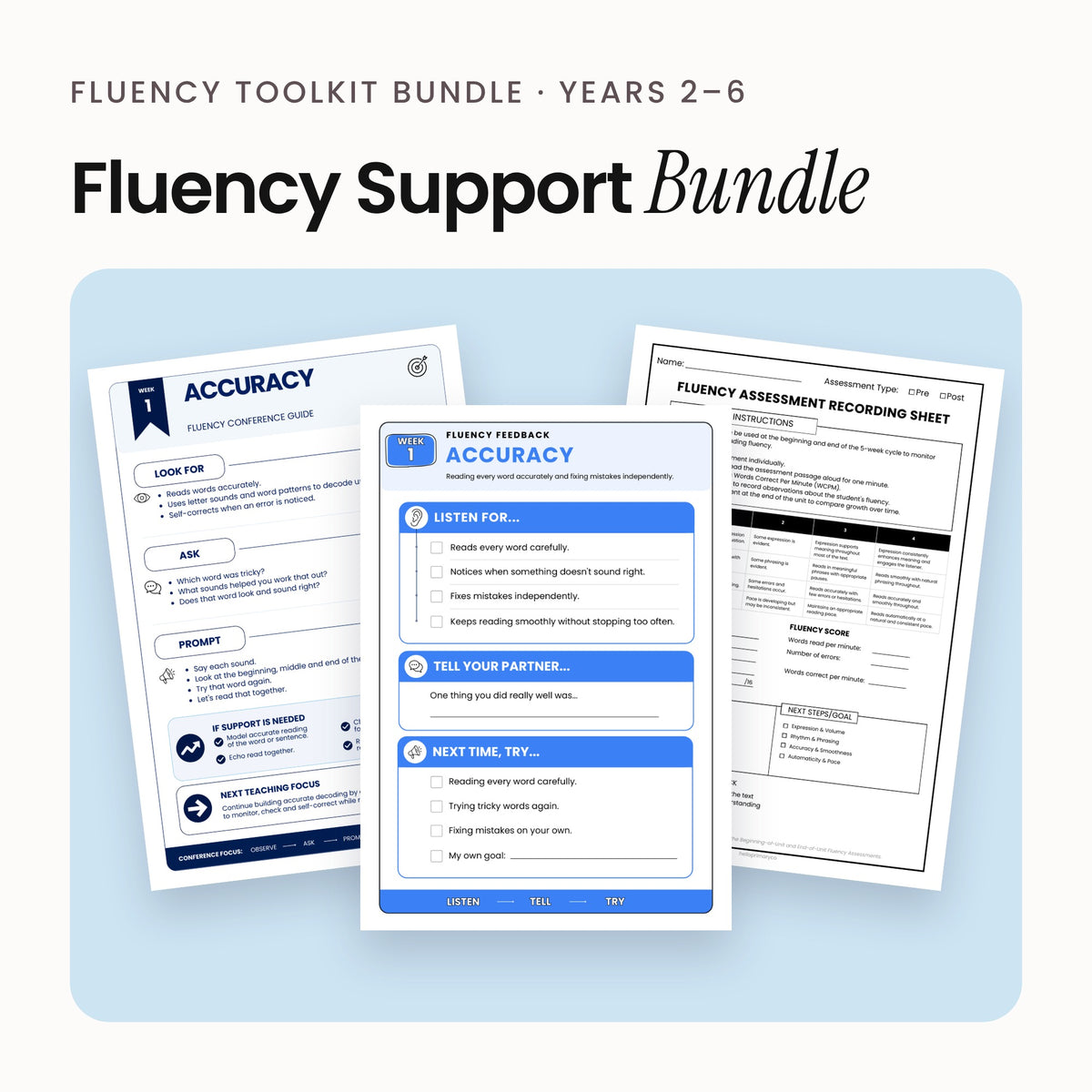
WCPM tells you about accuracy and pace, but not expression. Pair it with a short rubric that also looks at phrasing, expression and attention to punctuation. Use the results to set one small goal for each student, not to compare students with each other.
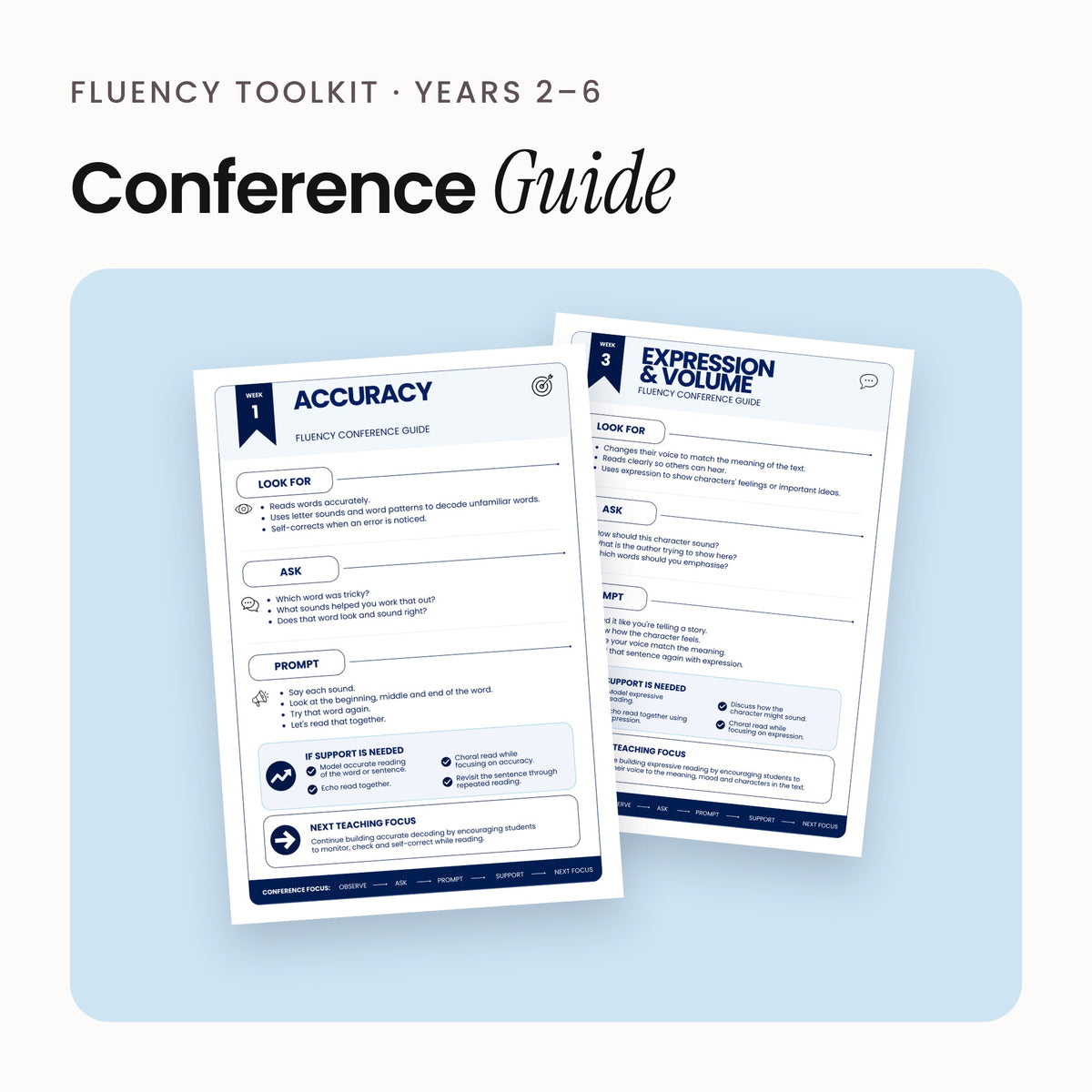
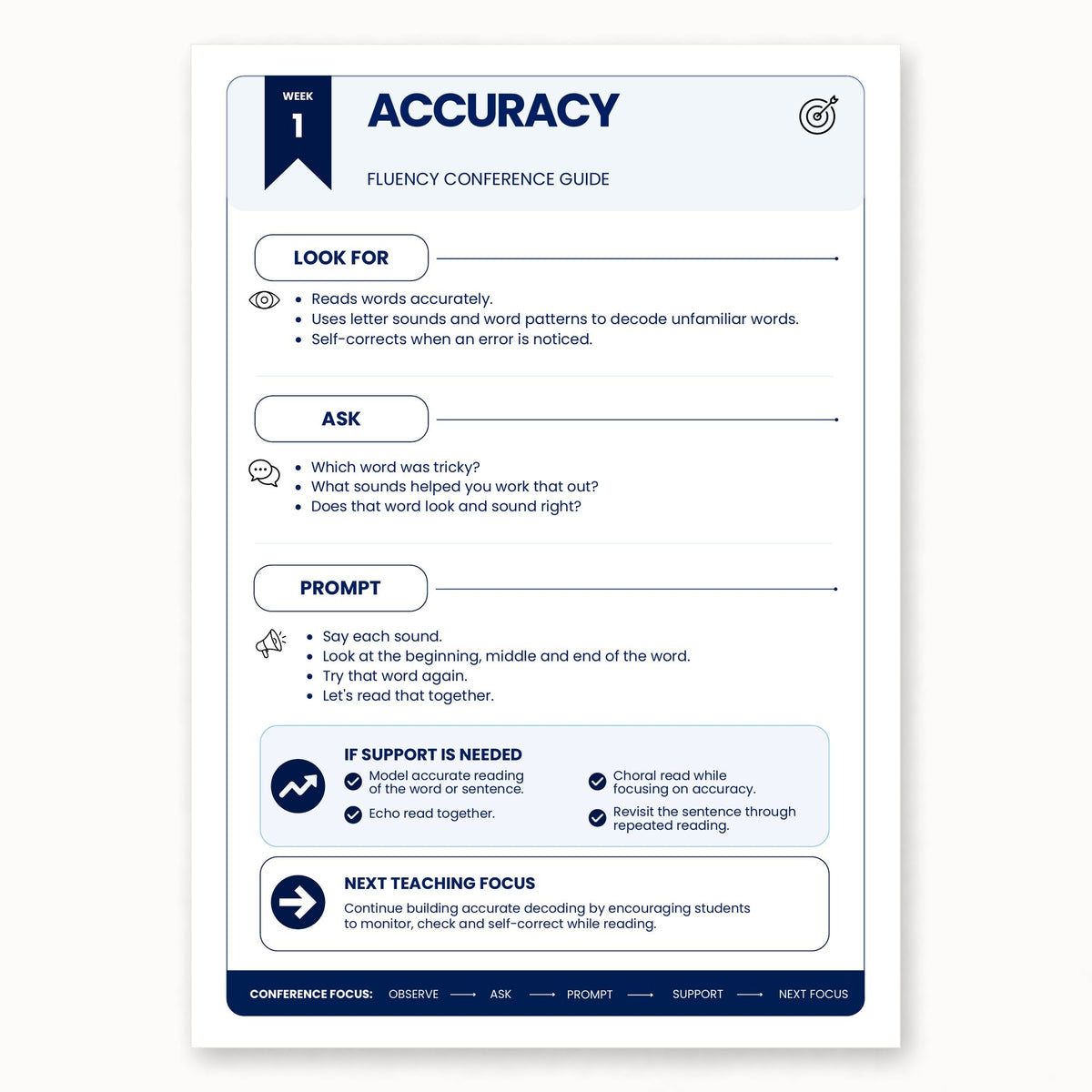
A short fluency conference is a good place to do this: listen, ask the student how they think it went, then agree on one thing to work on next.
No. 06 — Curriculum links
Where it sits in the curriculum
The fluency routine addresses these outcomes from the NSW English K–10 Syllabus (2022) and these content descriptions from the Australian Curriculum: English v9.0.
NSW English K–10 Syllabus
| Focus | Stage 2Years 3–4 | Stage 3Years 5–6 |
|---|---|---|
| Reading fluency | EN2-REFLU-01Reading fluency | EN3-RECOM-01Reading and comprehension |
| Vocabulary | EN2-VOCAB-01Vocabulary | EN3-VOCAB-01Vocabulary |
Australian Curriculum: English v9.0
| Focus | Years 3–4Year 3 · Year 4 | Years 5–6Year 5 · Year 6 |
|---|---|---|
| Reading fluency | AC9E3LY04 · AC9E4LY04Reading texts accurately and fluently | AC9E5LY04 · AC9E6LY04Reading texts for a purpose and monitoring meaning |
| Vocabulary | AC9E3LA10 · AC9E4LA11Extending vocabulary | AC9E5LA08 · AC9E6LA08Vocabulary for precision and effect |
In Stage 3, reading fluency is taught within the NSW Reading and comprehension outcome. The Australian Curriculum has no fluency-specific content description in Years 5 and 6, so the closest reading description is listed. Year 2 units link to the matching NSW Stage 1 outcomes and to AC9E2LY04 (reading with phrasing and fluency) and AC9E2LA09 (vocabulary).
Fluency resources
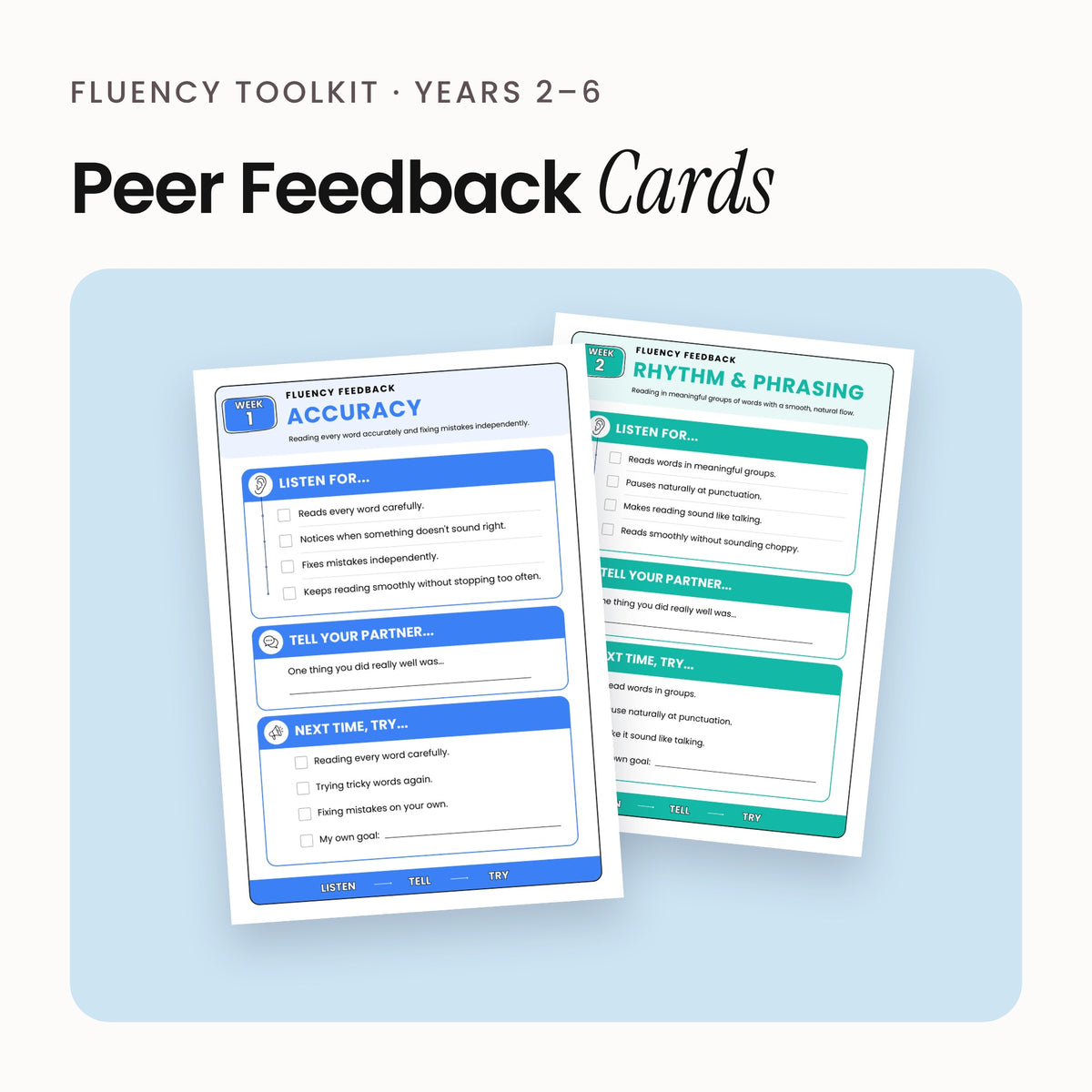
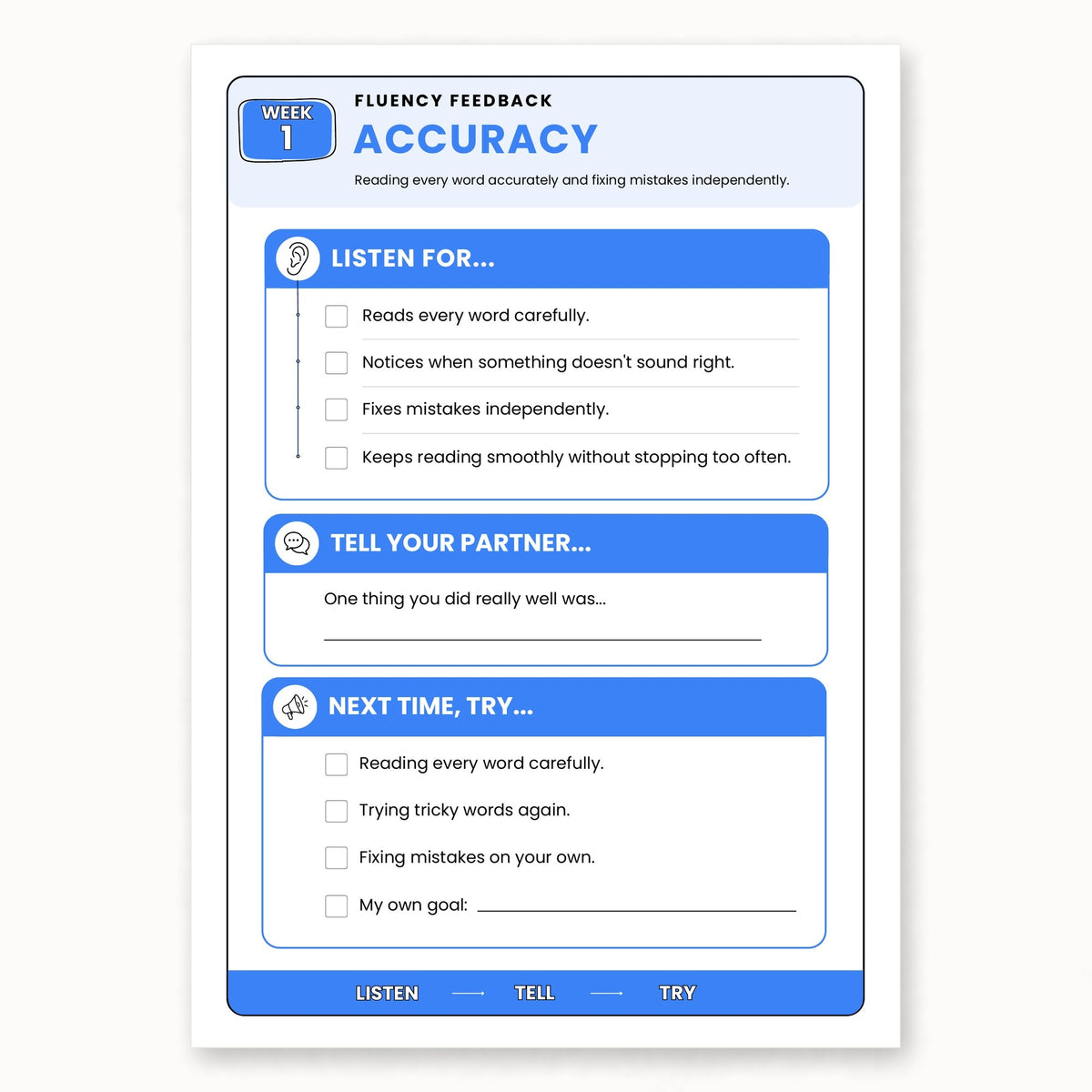
Five-week fluency units for Years 2–6, plus tools for conferences, peer feedback and assessment. Want to write your own passages? The Fluency Framework shows you how.
Literacy, Unpacked
Keep exploring
The connected literacy block
How fluency, Sentence of the Day and Quick Writes share one theme and one set of words.
Spelling & vocabulary
A four-lesson weekly sequence for vocabulary, spelling and Sentence of the Day.
Quick Writes & Daily Review
Short daily routines that keep every student writing and revisiting skills.
- Coming soon
Reading comprehension
Literal and inferential understanding, thinking routines and measuring growth.
- Coming soon
Teaching writing
Explicit mini lessons, mentor sentences, revising and editing, and matched writing assessments.